PTSD treatment works best when it combines a careful diagnosis, a proven trauma-focused therapy, and medication when it helps. At HarmonyVille in Mansfield, TX, our psychiatric team builds a personal plan so you can sleep again, feel safe in your own life, and stop reliving what happened.
If a memory keeps pulling you back to the worst day of your life, you are not weak and you are not alone. Post-traumatic stress disorder is a real, treatable condition. The VA’s National Center for PTSD estimates that about 6 out of every 100 people will have PTSD at some point in their lives. Many of them get better with the right care. This guide explains what PTSD treatment looks like, the seven options most plans are built on, and how to get started close to home in Mansfield.
Table of Contents
What Is PTSD, and Who Needs PTSD Treatment?
PTSD can develop after someone lives through or witnesses a frightening, dangerous, or violent event. That might be combat, a car crash, an assault, a natural disaster, a sudden loss, or a long stretch of abuse or neglect. It can also follow events that others might not think of as trauma, like a medical emergency or a difficult birth.
Most people feel shaken after something terrible happens. Bad dreams, jumpiness, and trouble focusing are normal in the first few weeks. For many people those reactions fade on their own. PTSD is different because the symptoms stick around for more than a month, or they get worse, and they start to interfere with work, relationships, school, or sleep.
You do not need to be a veteran to need PTSD treatment. Teachers, nurses, first responders, parents, teens, and retirees all walk through our doors. If the past is shaping how you live today, that is reason enough to talk to someone.
Common Signs of PTSD to Watch For
The National Institute of Mental Health groups PTSD symptoms into four main clusters. A provider looks for symptoms in each group before making a diagnosis.
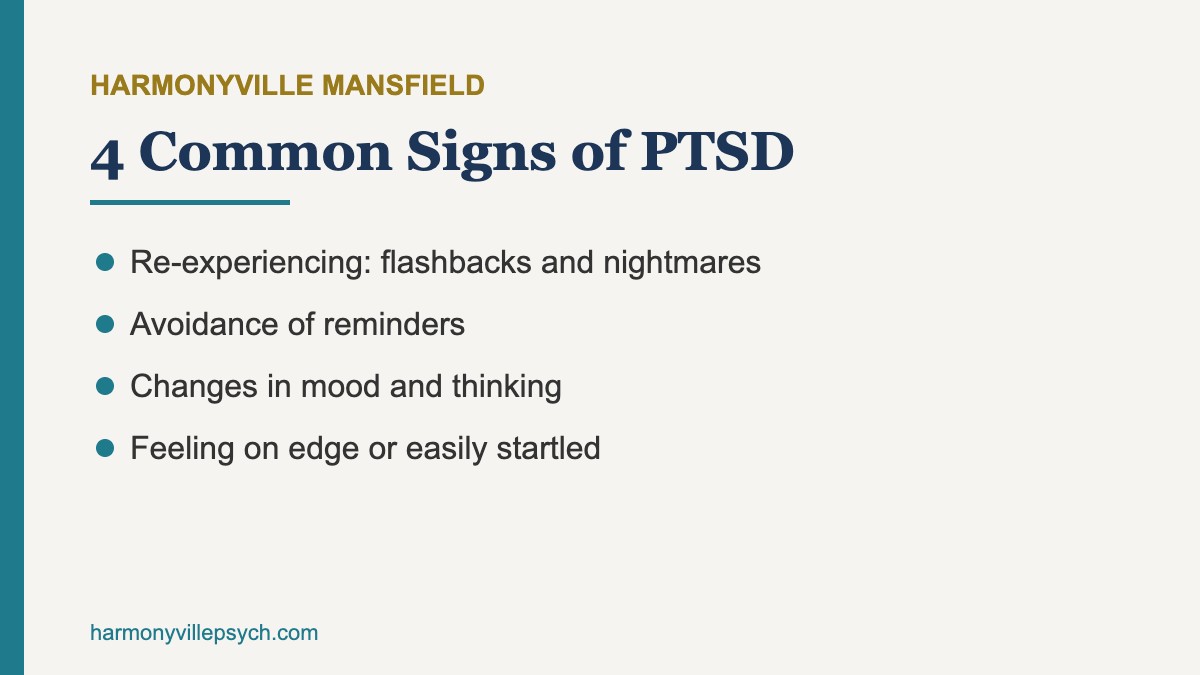
1. Re-experiencing the event
Flashbacks, nightmares, or intrusive memories that feel like they are happening right now. A smell, sound, or place can trigger a rush of fear or a racing heart.
2. Avoidance
Staying away from people, places, or conversations that bring back the memory. Some people stop driving, skip family events, or keep so busy that they never have a quiet moment to think.
3. Changes in mood and thinking
Ongoing guilt, shame, or blame. Feeling numb or cut off from people you love. Losing interest in things you used to enjoy. Trouble remembering parts of what happened.
4. Feeling on edge
Being easily startled, irritable, or angry. Trouble falling or staying asleep. Constantly scanning a room for danger. Many people say this is the most exhausting part, because the body never seems to switch off.
PTSD often shows up alongside depression, anxiety, or substance use. That overlap is one reason a full psychiatric evaluation matters. Good PTSD treatment looks at the whole picture, not just one symptom.
How PTSD Treatment in Mansfield, TX Starts
Your first step at HarmonyVille is a conversation, not a test you can fail. During a psychiatric evaluation, a provider will ask about your symptoms, your sleep, your health history, and how things are going at home and at work. You only share what you are ready to share. You do not have to describe the trauma in detail on day one.
From there, your provider will explain whether your symptoms fit PTSD or something else, such as an adjustment disorder, depression, or an anxiety disorder. Getting this right shapes everything that follows, because PTSD treatment is different from general stress management.
Together you will set goals that matter to you. For one person that might be sleeping through the night. For another it might be driving on the highway again or feeling present with their kids. Your plan is built around those goals.
7 Proven Options for PTSD Treatment
There is no single right path. Most effective plans combine two or more of the options below. Your provider will help you weigh them based on your symptoms, your history, and your preferences.
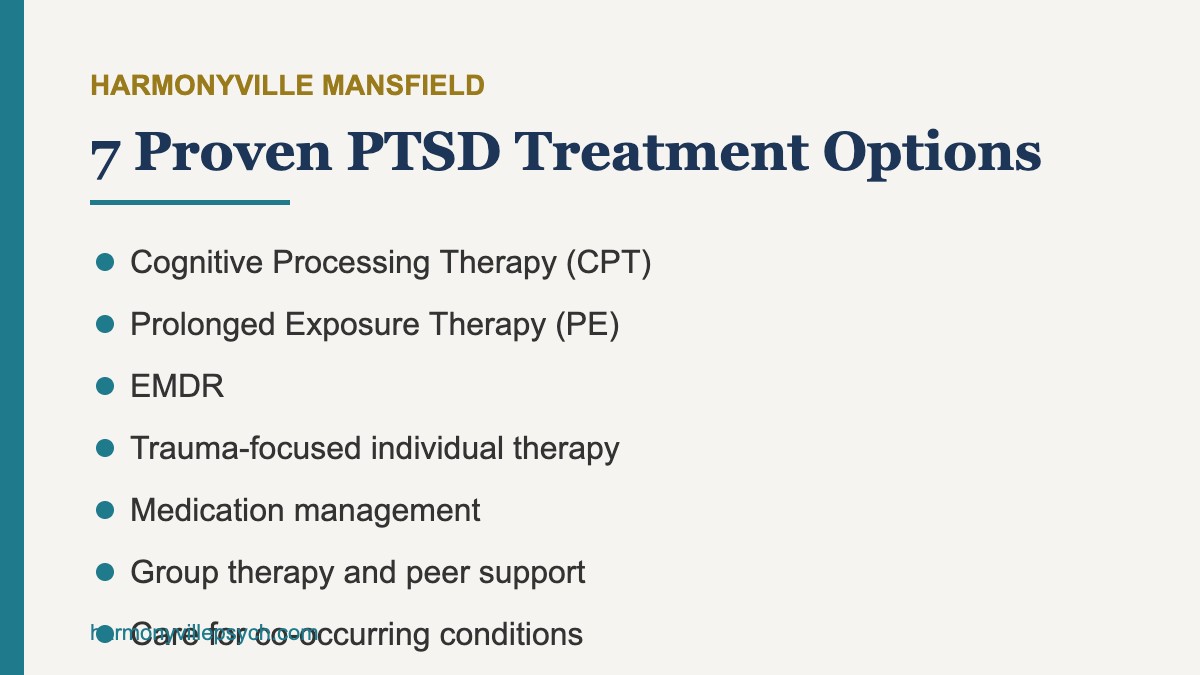
1. Cognitive Processing Therapy (CPT)
CPT is one of the most studied forms of PTSD treatment. It helps you notice and challenge “stuck points,” the beliefs that formed after the trauma, such as “It was my fault” or “The world is never safe.” Over about 12 sessions, many people find these beliefs loosen and the emotional weight of the memory gets lighter.
2. Prolonged Exposure Therapy (PE)
Avoidance keeps PTSD going. PE helps you approach memories and situations you have been avoiding, slowly and safely, with a trained therapist guiding each step. Over time the brain learns that the memory is not the danger, and the fear response begins to shrink.
3. Eye Movement Desensitization and Reprocessing (EMDR)
EMDR asks you to briefly focus on a memory while following a back-and-forth movement or sound. It is recommended by the VA National Center for PTSD as an evidence-based option. If EMDR is a good fit for you, our team can talk through access and referrals.
4. Trauma-Focused Individual Therapy
Weekly one-on-one sessions give you a steady, private space to build coping skills, work through grief or anger, and practice grounding tools for hard moments. Our individual therapy services are often the backbone of a long-term plan.
5. Medication Management
Medication does not erase memories, but it can lower the volume on anxiety, low mood, and hyperarousal so therapy can do its work. Sertraline and paroxetine are the two medications approved by the FDA for PTSD, and providers sometimes use other options based on your needs. Some people also get relief from medication aimed at trauma nightmares. A psychiatrist will review benefits, side effects, and follow-up with you. Learn more about psychiatry and medication management at HarmonyVille.
6. Group Therapy and Peer Support
Trauma can make people feel deeply alone. Hearing others describe the same nightmares or the same guilt can be a powerful relief. Group therapy adds connection and accountability to individual care, and many people say it is where they first felt understood.
7. Treatment for Co-Occurring Conditions
When PTSD travels with depression, anxiety, ADHD, or substance use, treating only one condition can stall progress. A complete plan addresses each one. For example, treating depression can give you the energy you need to keep showing up for trauma therapy. If depression has not responded to past care, ask about our depression treatment options, including advanced approaches a provider can explain at your visit.
PTSD Treatment for Complex Trauma
Some people did not live through one terrible event. They lived through months or years of harm, such as childhood abuse, domestic violence, or long exposure to danger at work. This is sometimes called complex trauma, and it can shape how a person sees themselves and others for a long time.
People with complex trauma may struggle with trust, feel intense shame, find it hard to manage strong emotions, or feel like they never fully belong anywhere. PTSD treatment for complex trauma often begins with a stabilization phase. In this phase, you build skills for calming your body, handling big feelings, and staying grounded before doing deeper memory work.
This phased approach is not slower for the sake of it. It makes sure you have a solid foundation, so the harder work feels safer and more effective. Your provider will move at a pace that respects your history.
PTSD Treatment for Teens and Young Adults
Teens can develop PTSD after car accidents, bullying, assault, sudden loss, or community violence. Their symptoms can look different from adult symptoms. A teen may seem angry, reckless, or withdrawn rather than openly afraid. Grades may slip, friendships may change, and sleep may fall apart.
Effective PTSD treatment for young people usually involves the family. Trauma-focused cognitive behavioral therapy, often called TF-CBT, is a well-studied option that includes sessions with both the teen and a caregiver. Parents learn how to respond to triggers and support new coping skills at home.
If you are a parent in Mansfield and something about your child has changed since a frightening event, trust that instinct. Early PTSD treatment can keep symptoms from settling in and help your child get back to being a kid.
Myths That Keep People From Getting PTSD Treatment
Many people wait years before asking for help. Often it is because of beliefs that simply are not true.
- “Only soldiers get PTSD.” Military service is one cause, but anyone who has been through trauma can develop it.
- “I should be over it by now.” PTSD is not about willpower. Time alone does not always heal trauma, but treatment often does.
- “Therapy will make me relive everything.” Good therapists go at your pace and teach you coping skills first.
- “Medication will change who I am.” The goal of medication is to help you feel more like yourself, not less. Your provider will adjust anything that does not feel right.
- “Other people had it worse.” Pain is not a competition. If symptoms are affecting your life, you deserve care.
Letting go of these myths is often the first real step toward PTSD treatment that works.
What Recovery With PTSD Treatment Looks Like
Recovery is rarely a straight line. Many people notice small wins first: falling asleep a little faster, getting through a trigger without leaving the room, or laughing at dinner again. Those wins add up.
Trauma-focused therapies like CPT and PE are often delivered over about three to four months of weekly sessions, though every plan is different. Medication usually needs several weeks to show its full effect. Your provider will check in on your progress and adjust the plan if something is not working.
It is also normal for symptoms to flare during stressful seasons, anniversaries, or major life changes. A flare does not mean treatment failed. It means it is time to lean on the skills you have built and, if needed, add support for a while.
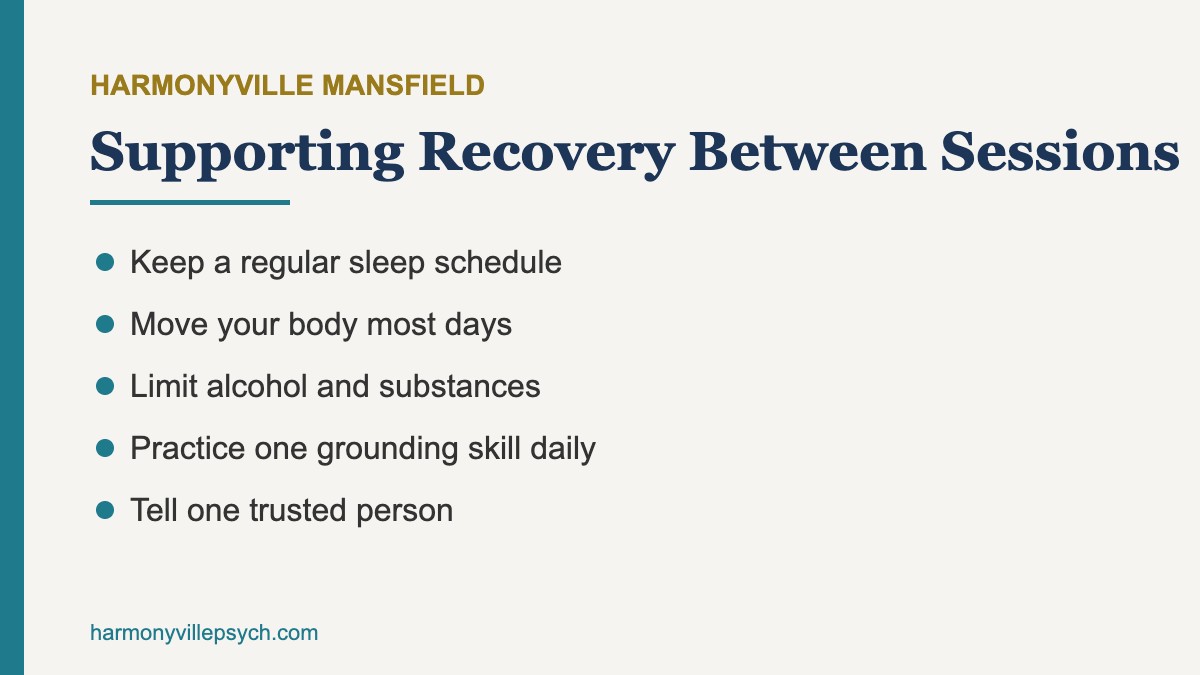
Ways to support your recovery between sessions
- Keep a regular sleep and wake time, even on weekends.
- Move your body most days. A short walk around your Mansfield neighborhood counts.
- Limit alcohol and other substances, which can worsen sleep and anxiety.
- Practice one grounding skill daily, such as slow breathing or naming five things you can see.
- Tell one trusted person what you are working on so you are not carrying it alone.
How to Support a Loved One Who Needs PTSD Treatment
Watching someone you love struggle with trauma can leave you feeling helpless. You cannot fix PTSD for them, but you can make it easier to get help.
- Listen without pushing. Let them share at their own pace. You do not need the details to be supportive.
- Learn the signs. Irritability or pulling away is often a symptom, not a sign they do not care.
- Offer practical help. Look up providers together, drive them to the first appointment, or sit with them while they make the call.
- Take care of yourself too. Caregivers carry real stress. Your own therapy or a support group can help you stay steady.
If a teen in your life is struggling after a frightening event, our child and adolescent psychiatry team can help your family understand what is happening and what comes next.
Why Choose HarmonyVille for PTSD Treatment in Mansfield
Trauma care works best when you trust the people providing it. At HarmonyVille, you get a team that treats you like a person first and a diagnosis second.
- Psychiatry and therapy under one roof. Your prescriber and therapist can coordinate your care instead of working in separate silos.
- Plans built around your goals. We focus on the parts of life you want back, not a one-size-fits-all checklist.
- A calm, judgment-free setting. You set the pace for what you share and when.
- Local care. Our Mansfield, TX clinic serves Mansfield, Arlington, Grand Prairie, Kennedale, and nearby communities in southern Tarrant County and northern Johnson County.
Questions to ask at your first PTSD treatment visit
- Which therapy approaches do you recommend for my symptoms, and why?
- Would medication help me, and what side effects should I watch for?
- How often will we meet, and how will we measure progress?
- What should I do if my symptoms get worse between visits?
- How will my therapist and prescriber share updates about my care?
Bringing these questions with you makes it easier to feel like a partner in your PTSD treatment from the very first day. It is okay to write them down and read from your phone or a notebook.
You may also find it helpful to read what to expect at your first psychiatric visit before you book.
Frequently Asked Questions About PTSD Treatment
Can PTSD be cured?
Many people improve so much with PTSD treatment that they no longer meet the criteria for the diagnosis. Others find their symptoms become much milder and easier to manage. A provider can help you set realistic goals and track your progress over time.
Do I have to talk about my trauma in detail?
Not right away, and not always. Some therapies, like CPT, focus more on your thoughts and beliefs than on retelling every detail. Your therapist will explain each approach and you will decide together what feels manageable.
How do I know if it is PTSD or just stress?
Stress usually eases once a hard situation passes. PTSD symptoms last longer than a month, are tied to a specific traumatic event, and get in the way of daily life. If you are not sure, an evaluation can give you a clear answer and a plan.
How long does PTSD treatment take?
It depends on your symptoms and goals. Many structured trauma therapies run about 8 to 16 weekly sessions. Some people continue with therapy or medication longer to protect their progress. Your provider will review your plan with you regularly.
Does insurance cover PTSD treatment in Mansfield, TX?
Many insurance plans cover psychiatric evaluations, therapy, and medication management for PTSD. Coverage varies by plan, so our front desk team can help you check your benefits before your first appointment.
What if I am in crisis right now?
If you are thinking about hurting yourself or feel unsafe, call or text 988 to reach the 988 Suicide and Crisis Lifeline, available 24 hours a day. Veterans can press 1 after dialing 988. If you are in immediate danger, call 911 or go to the nearest emergency room.
Take the First Step Toward Healing
PTSD can make the past feel like it is still happening. Effective PTSD treatment helps you put it back where it belongs, behind you. You do not have to wait until things get worse, and you do not have to figure it out alone.
Our team in Mansfield, TX is ready to listen and help you build a plan that fits your life. Request an appointment today, or contact our team with any questions about getting started.
This article is for educational purposes and is not a substitute for professional medical advice. Please talk with a licensed provider about your specific situation.