A psychiatric nurse practitioner is a board-certified, advanced practice nurse who can evaluate your mental health, make a diagnosis, prescribe medication, and guide your treatment over time. If you have been waiting months to see a psychiatrist, or you are not sure who to call about anxiety, depression, or ADHD, a psychiatric nurse practitioner may be the fastest and most personal path to care.
In this guide, the HarmonyVille team explains what a psychiatric nurse practitioner does, how their training compares to a psychiatrist, what conditions they treat, and what your first visit looks like. You will also find seven reasons many patients choose this type of provider, plus answers to the questions we hear most often in our Mansfield and McKinney, TX offices.
Table of Contents
What Is a Psychiatric Nurse Practitioner?
A psychiatric nurse practitioner, often called a PMHNP (Psychiatric-Mental Health Nurse Practitioner), is a registered nurse who has completed graduate-level training focused on mental health. They are licensed as an Advanced Practice Registered Nurse (APRN), which allows them to assess, diagnose, and treat patients rather than only carry out another clinician’s orders.
Think of a psychiatric nurse practitioner as a mental health specialist who blends two skill sets: the clinical, medical side of psychiatry and the whole-person, relationship-centered approach that nursing is known for. That combination is a big reason patients often describe their visits as both thorough and easy to talk through.
Training and Board Certification
The path to becoming a psychiatric nurse practitioner is long and demanding. Most PMHNPs follow a similar route:
- Earn a nursing degree and pass the national registered nurse licensing exam.
- Work as a registered nurse, often in hospital, psychiatric, or community settings.
- Complete a Master of Science in Nursing (MSN) or Doctor of Nursing Practice (DNP) with a psychiatric-mental health specialty.
- Finish hundreds of supervised clinical hours diagnosing and treating patients.
- Pass a national board exam to earn the PMHNP-BC credential through the American Nurses Credentialing Center.
When you see “PMHNP-BC” after a provider’s name, it means they are board certified in psychiatric-mental health and must keep that certification current with ongoing education.
How PMHNPs Practice in Texas
Every state sets its own rules for nurse practitioners. In Texas, a psychiatric nurse practitioner is licensed by the Texas Board of Nursing and practices under a prescriptive authority agreement with a supervising physician. In plain terms, your PMHNP leads your day-to-day care, and a physician partner is available for collaboration when a case calls for it. Certain controlled medications also carry extra state rules, and your provider will explain how those apply to your treatment.
What Does a Psychiatric Nurse Practitioner Do?
A psychiatric nurse practitioner handles most of the same outpatient tasks you would expect from a psychiatry practice. According to the American Association of Nurse Practitioners, NPs assess patients, order and interpret tests, make diagnoses, and start and manage treatment plans, including prescribing medication. For a PMHNP, all of that is focused on mental and behavioral health.
Day to day, a psychiatric nurse practitioner will typically:
- Complete psychiatric evaluations that look at symptoms, history, family background, sleep, stress, and daily functioning.
- Diagnose mental health conditions using standard clinical criteria.
- Prescribe and manage medication, including adjusting doses and watching for side effects.
- Order lab work or screenings when needed to rule out physical causes of symptoms.
- Provide supportive counseling and coping strategies during visits.
- Coordinate care with therapists, primary care providers, and other specialists.
- Educate patients and families about the condition and the reasoning behind each part of the plan.
If you are curious about how medication decisions are made, our guide to a psychiatric medication evaluation walks through that process step by step.
Conditions a Psychiatric Nurse Practitioner Treats
Because PMHNPs are trained across the lifespan, a psychiatric nurse practitioner can support a wide range of concerns. Common reasons patients book a visit include:
- Depression, including low mood, loss of interest, and fatigue that will not lift
- Anxiety disorders, such as generalized anxiety, panic attacks, and social anxiety
- ADHD in children, teens, and adults
- Bipolar disorder and mood swings
- Post-traumatic stress disorder (PTSD) and trauma-related symptoms
- Obsessive-compulsive disorder (OCD)
- Sleep problems linked to stress or mood
- Adjustment struggles after a major life change, such as a loss, divorce, or move
Not sure your symptoms are “serious enough”? That is one of the most common worries we hear. If something is affecting your sleep, work, school, relationships, or sense of self for more than a couple of weeks, it is worth talking to a professional.
Psychiatric Nurse Practitioner vs. Psychiatrist: Key Differences
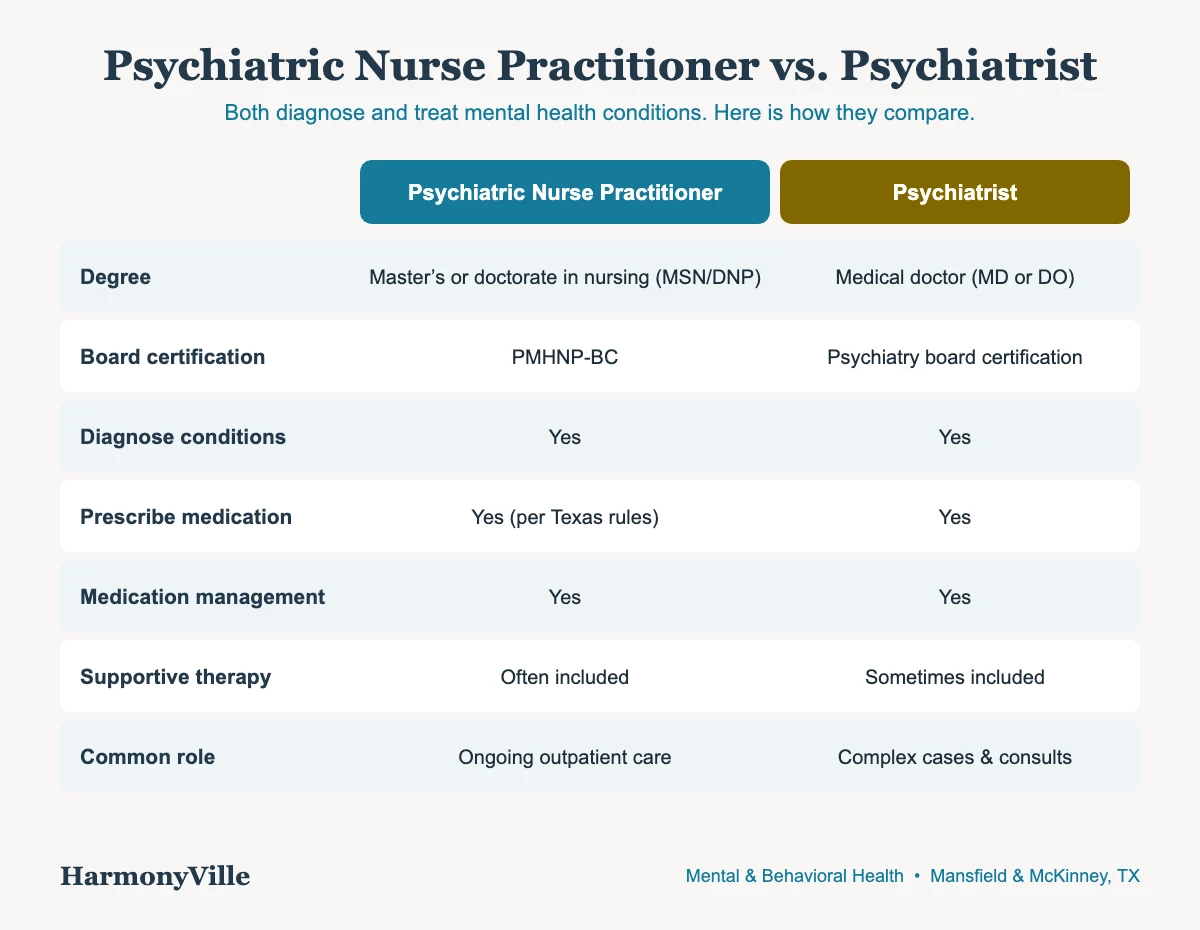
Both a psychiatric nurse practitioner and a psychiatrist can diagnose mental health conditions and prescribe medication. The main difference is the training path. A psychiatrist is a medical doctor (MD or DO) who completed medical school and a psychiatry residency. A psychiatric nurse practitioner comes from nursing, with graduate training and board certification in psychiatric-mental health.
Where They Overlap
For most outpatient needs, such as treating depression, anxiety, or ADHD, the day-to-day care looks very similar. Both providers complete evaluations, build treatment plans, manage medication, and schedule regular follow-ups. Both are bound by the same standards of patient safety and privacy.
Where They Differ
Psychiatrists have longer medical training and are often involved when a case is highly complex, such as several overlapping conditions, unusual medication reactions, or symptoms that have not responded to multiple treatments. A psychiatric nurse practitioner often has more appointment availability and may spend more time on education and lifestyle factors during each visit.
Which One Should You See?
For many patients, the best answer is “a team that has both.” At HarmonyVille, nurse practitioners and psychiatrists work side by side, so you can start care quickly and still have physician expertise available if your needs change. If you are also weighing therapy, our article on the difference between a psychiatrist and a therapist can help you sort out who does what.
7 Best Reasons to See a Psychiatric Nurse Practitioner
Choosing a provider is personal. Here are seven reasons many families and adults decide a psychiatric nurse practitioner is the right fit.
1. Shorter Wait Times for Appointments
Psychiatrist waitlists can stretch for weeks or months in many areas. Because there are more PMHNPs in outpatient practice, it is often easier to get a new-patient appointment sooner. Earlier care can keep symptoms from getting worse.
2. Full Evaluation and Diagnosis
You do not need to see someone else first to get answers. A psychiatric nurse practitioner can complete a full psychiatric evaluation and give you a clear diagnosis, which is the foundation for any effective plan.
3. Medication Management Under One Roof
From the first prescription to dose adjustments months later, your PMHNP can manage it all. That means fewer handoffs, fewer gaps, and one provider who knows your history.
4. A Whole-Person Approach
Nursing training emphasizes the whole person. Expect questions about sleep, nutrition, exercise, relationships, and stress, not just symptoms. These details often shape a plan that fits your real life.
5. Time to Ask Questions
Many patients say their psychiatric nurse practitioner takes time to explain each option, possible side effects, and what to expect next. Feeling informed makes it easier to stay on track and speak up when something is not working.
6. Care for Every Age
PMHNPs are trained to treat patients across the lifespan. That makes it simpler for families to get care in one place, from a child with attention concerns to a parent managing anxiety. Learn more about our child and adolescent psychiatry services.
7. Flexible Visits, Including Telehealth
Many follow-up visits can happen by video, which saves time and makes it easier to stay consistent. HarmonyVille offers telehealth appointments for eligible patients, along with in-person visits in Mansfield and McKinney.
What to Expect at Your First Visit
Knowing what will happen can make a first appointment feel much less intimidating. Most first visits with a psychiatric nurse practitioner last about an hour and follow four simple steps.
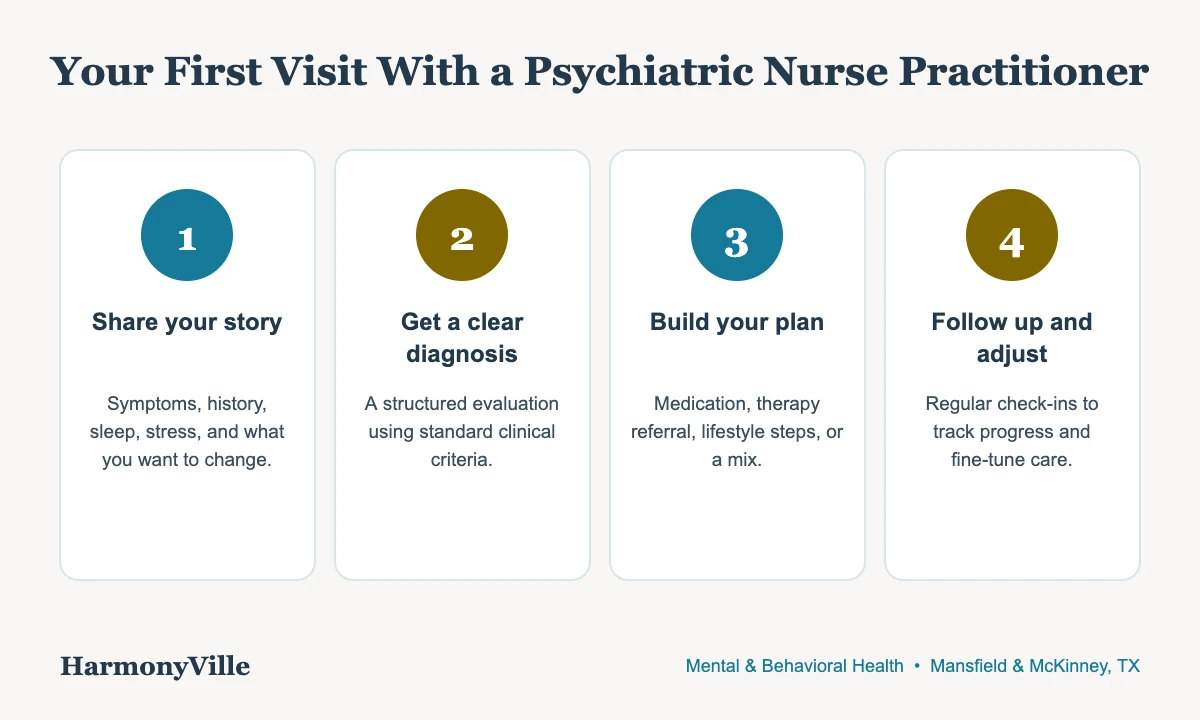
- Share your story. Your provider will ask what brought you in, how long symptoms have been going on, and how they affect your daily life. There are no wrong answers.
- Review your history. Expect questions about past treatment, medications, medical conditions, family mental health history, substance use, and sleep.
- Get a clear diagnosis. Your psychiatric nurse practitioner will explain what they are seeing and why, using plain language.
- Build your plan together. This may include medication, a referral for therapy, lab work, lifestyle steps, or a combination. You will leave knowing the next step and when your follow-up is scheduled.
It helps to bring a list of current medications, any past records, and a few notes about your symptoms. Our first psychiatric visit guide and new patient information page cover what to bring in more detail.
How Often Are Follow-Up Visits?
Early in treatment, follow-ups are usually every few weeks so your provider can see how you are responding. Once you are feeling more stable, visits are often spaced out to every one to three months. Your schedule is always based on your needs, not a one-size-fits-all rule.
Signs It May Be Time to See a Psychiatric Nurse Practitioner
Many people wait far longer than they need to before getting help, often because they are not sure their struggles “count.” These signs suggest an evaluation could be a smart next step:
- You have felt sad, empty, irritable, or hopeless most days for two weeks or longer.
- Worry or panic is making it hard to work, drive, sleep, or leave the house.
- You have trouble focusing, staying organized, or finishing tasks, and it is affecting school or your job.
- Your sleep or appetite has changed a lot without a clear reason.
- You are relying on alcohol or other substances to cope with stress.
- A current medication is not helping, or the side effects are hard to live with.
- Friends or family have mentioned that you do not seem like yourself.
Parents should also watch for changes in children and teens, such as pulling away from friends, a sudden drop in grades, frequent stomachaches before school, or outbursts that feel out of proportion. A psychiatric nurse practitioner can help you tell the difference between a normal rough patch and a condition that benefits from treatment.
Questions to Ask at Your First Appointment
Coming in with a few questions helps you get the most out of your time and makes it easier to decide if the fit feels right. Consider asking:
- What do you think is causing my symptoms, and how did you reach that diagnosis?
- What treatment options do I have besides medication?
- If you recommend medication, how long before I might notice a difference?
- What side effects should I watch for, and when should I call you?
- How often will we meet, and can some visits happen by telehealth?
- Who should I contact between appointments if something changes?
A good provider will welcome these questions. Clear answers build trust, and trust is one of the strongest predictors that a treatment plan will actually work for you over the long run. For more ideas, browse our list of questions to ask your psychiatrist.
How to Choose the Right Psychiatric Nurse Practitioner
A good fit matters as much as credentials. Use this quick checklist when comparing providers:
- Board certification: Look for PMHNP-BC (or a relevant specialty credential for pediatric care).
- Experience with your concern: Ask whether they regularly treat conditions like yours.
- Age focus: Confirm they see adults, children, or teens, depending on who needs care.
- Team support: Practices with psychiatrists and therapists on staff can adjust care as needs change.
- Insurance and cost: Check that the practice is in network or offers clear self-pay rates.
- Availability: Ask about new-patient wait times and telehealth options.
- Comfort: You should feel heard and respected. It is okay to switch if the fit is not right.
For more warning signs to watch for, read our list of red flags in a psychiatric provider.
Psychiatric Nurse Practitioner Care at HarmonyVille
At HarmonyVille, our board-certified nurse practitioners work alongside psychiatrists and therapists to deliver coordinated, compassionate care. Our psychiatric-mental health nurse practitioners include Nadia Hayes, MSN, APRN, PMHNP-BC, Minu Bijo Philip, APRN-CNP, PMHNP-BC, and Alexander Ng, APRN, PMHNP-BC. You can meet the full team on our providers page.
We see patients in two North Texas locations:
- Mansfield, TX: serving Mansfield, Arlington, Grand Prairie, and nearby communities.
- McKinney, TX: serving McKinney, Allen, Frisco, Prosper, and the surrounding Collin County area.
Whether you need a first evaluation, a second opinion on your medication, or ongoing psychiatry and medication management, our team will help you find the right provider. You can also review accepted plans on our insurance and costs page before you book.
Frequently Asked Questions
Can a psychiatric nurse practitioner prescribe medication in Texas?
Yes. A psychiatric nurse practitioner in Texas can prescribe psychiatric medications, including antidepressants, anti-anxiety medications, mood stabilizers, and many ADHD medications. They do so under a prescriptive authority agreement with a physician, and some controlled substances have additional state rules. Your provider will explain any limits that apply to your plan.
Is a psychiatric nurse practitioner as good as a psychiatrist?
For most outpatient conditions, a board-certified psychiatric nurse practitioner provides high-quality care that is comparable in day-to-day practice. The best provider is the one who is qualified for your needs, available when you need them, and someone you trust. In a team setting, your PMHNP can consult a psychiatrist whenever a case is more complex.
Do psychiatric nurse practitioners provide therapy?
PMHNPs are trained in psychotherapy, and many offer supportive counseling during medication visits. For ongoing weekly talk therapy, your provider may refer you to a licensed therapist. At HarmonyVille, individual therapy is available in-house, which keeps your care connected.
Does insurance cover a psychiatric nurse practitioner?
Most major insurance plans, including many commercial plans, cover mental health visits with a psychiatric nurse practitioner. Coverage, copays, and deductibles vary by plan, so call your insurer or our office to confirm your benefits before your first visit.
Can a psychiatric nurse practitioner see children and teens?
Yes. PMHNPs are certified to treat patients across the lifespan, and many work with children and adolescents for concerns like ADHD, anxiety, and depression. Parents or guardians are usually involved in the first visit and in treatment decisions.
Do I need a referral to see a psychiatric nurse practitioner?
Usually not. Many patients book directly. Some insurance plans, especially HMOs, may require a referral from your primary care provider, so it is worth checking your plan first.
Ready to Meet a Psychiatric Nurse Practitioner?
You do not have to figure this out alone. A psychiatric nurse practitioner at HarmonyVille can help you understand what you are feeling, explain your options, and start a plan that fits your life, often sooner than you might expect.
Request an appointment online or call our Mansfield office at (682) 341-3040 or our McKinney office at (682) 708-2797. Have a general question first? Contact our team and we will be glad to help.
If you or someone you love is in crisis or thinking about self-harm, call or text 988 to reach the 988 Suicide & Crisis Lifeline, or call 911 right away.
This article is for educational purposes and is not a substitute for professional medical advice. Please talk with a qualified provider about your specific situation.