Postpartum depression treatment can help you feel like yourself again, and reaching out for it is one of the most protective things you can do for your baby and your family. If the weeks after birth feel heavier, darker, or more frightening than anyone warned you about, you are not failing at motherhood. You may be living with a common, treatable medical condition.
At HarmonyVille, our psychiatric providers in Mansfield and McKinney, TX, care for new and expecting parents every week. This guide explains how to tell the “baby blues” from postpartum depression, the warning signs to watch for, and seven proven paths to healing, so you can take a confident next step.
Table of Contents
What Is Postpartum Depression?
Postpartum depression (PPD) is a mood disorder that can develop after childbirth. It is part of a broader group called perinatal depression, which also includes depression that starts during pregnancy. According to the National Institute of Mental Health, most episodes begin within 4 to 8 weeks after delivery, although symptoms can appear any time in the first year.
PPD is not caused by anything you did or did not do. Research points to a mix of factors, including the dramatic hormone shifts after birth, genetics, sleep deprivation, and the physical and emotional demands of caring for a newborn. CDC survey data suggests that roughly 1 in 8 women report symptoms of postpartum depression after giving birth, which means it is one of the most common complications of having a baby.
The encouraging part: with the right postpartum depression treatment, most people feel significantly better. The key is recognizing what is happening early and getting connected with care.
Baby Blues vs. Postpartum Depression: How to Tell the Difference
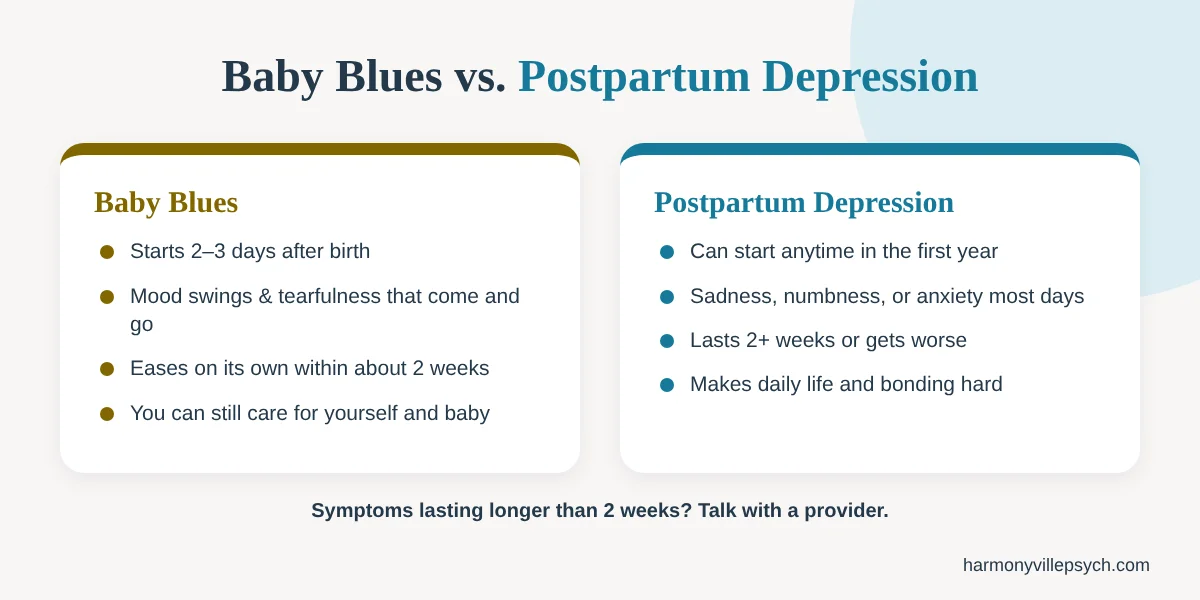
Many new parents hear “it’s just the baby blues” and wait for things to pass. Sometimes that is true. The baby blues are common, mild, and short-lived. Postpartum depression is different in intensity, duration, and how much it interferes with daily life.
Signs It May Be the Baby Blues
- Tearfulness, mood swings, or feeling overwhelmed that starts a few days after birth
- Symptoms that come and go, with good moments mixed in
- Feelings that ease on their own within about 2 weeks
- You can still care for yourself and your baby, even if you feel tired
Signs It May Be Postpartum Depression
- Sadness, emptiness, or hopelessness most of the day, nearly every day, for 2 weeks or longer
- Symptoms that are getting worse instead of better
- Difficulty bonding with your baby or feeling detached
- Struggling to get through basic daily tasks
- Intrusive thoughts, intense guilt, or thoughts of harming yourself
If you are unsure which one you are experiencing, that uncertainty alone is a good reason to talk with a provider. A short conversation can bring clarity, and there is no such thing as asking “too early.”
Common Postpartum Depression Symptoms to Watch For
Postpartum depression looks different for everyone. Some parents feel deep sadness. Others mainly feel numb, irritable, or anxious. Common symptoms include:
- Persistent low mood: feeling sad, empty, or hopeless most days
- Irritability or anger: snapping at your partner or feeling constantly on edge
- Overwhelming guilt: believing you are a bad parent or that your baby deserves better
- Loss of interest: no longer enjoying things that used to matter to you
- Sleep problems: being unable to sleep even when the baby is sleeping
- Changes in appetite: eating much more or much less than usual
- Racing worries: constant fear that something bad will happen to your baby
- Brain fog: trouble concentrating, remembering, or making simple decisions
- Withdrawal: pulling away from friends, family, or your partner
Postpartum anxiety and postpartum obsessive-compulsive symptoms often show up alongside depression. If worry, checking, or unwanted scary thoughts are taking over your day, mention them to your provider. These are well-known, treatable patterns, and naming them helps your care team build the right plan. Our anxiety disorder treatment services can address both at the same time.
When It Is an Emergency
Postpartum psychosis is rare but serious. Signs include confusion, hallucinations, paranoia, extreme agitation, or beliefs that are clearly out of touch with reality. It is a psychiatric emergency. Call 911 or go to the nearest emergency room right away. If you are having thoughts of suicide or of harming your baby, call or text the 988 Suicide and Crisis Lifeline at 988, or call 911.
Who Is at Higher Risk for Postpartum Depression?
Postpartum depression can affect anyone after childbirth, regardless of age, income, or background. Certain factors can raise the risk:
- A personal or family history of depression, anxiety, or bipolar disorder
- Depression during pregnancy or after a previous birth
- A difficult pregnancy, traumatic birth, or NICU stay
- Limited support from a partner, family, or friends
- Major life stress, such as financial strain, a move, or relationship conflict
- Challenges with breastfeeding or a baby with health needs
If any of these apply to you, consider talking with a psychiatric provider before your due date. Creating a postpartum mental health plan in advance can make it easier to start postpartum depression treatment quickly if symptoms appear.
Postpartum Depression Treatment: 7 Proven Ways to Heal
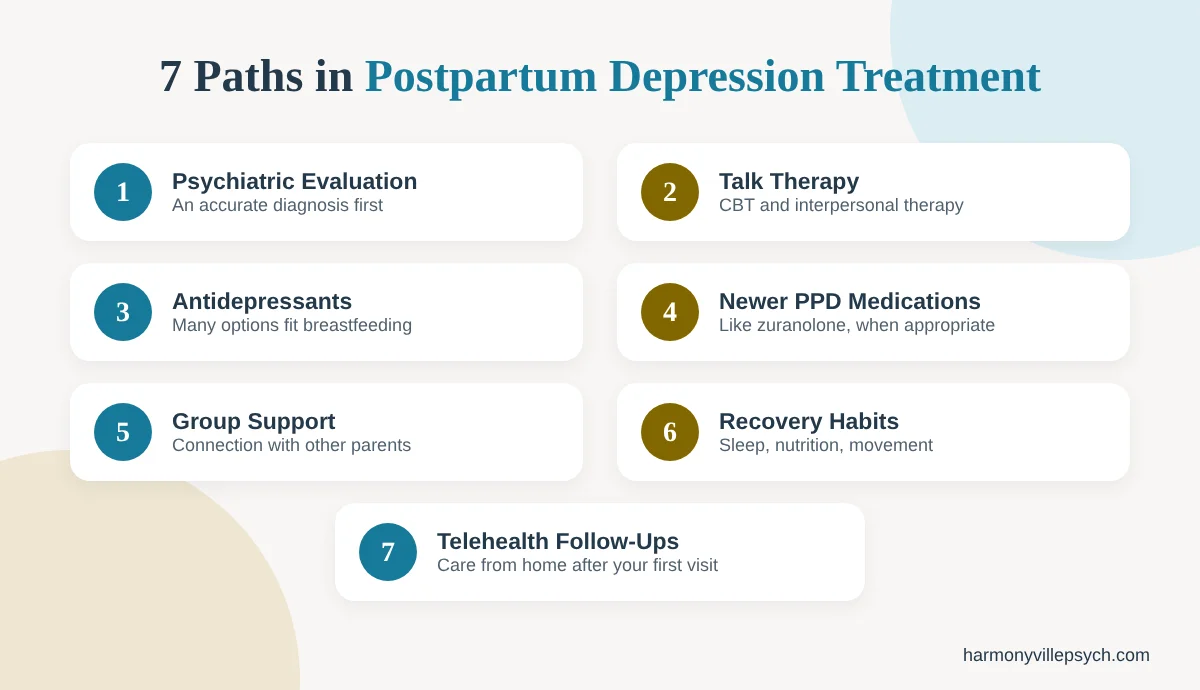
There is no single right approach. The best postpartum depression treatment plan depends on how severe your symptoms are, whether you are breastfeeding, your health history, and what feels doable in this season of life. Here are seven evidence-based options a provider may discuss with you.
1. A Thorough Psychiatric Evaluation
Effective postpartum depression treatment starts with understanding exactly what is going on. A psychiatric evaluation looks at your symptoms, sleep, history, birth experience, and support system. Your provider may use a validated screening tool such as the Edinburgh Postnatal Depression Scale and may recommend lab work to rule out physical causes, like thyroid changes, which can mimic depression after birth.
An accurate diagnosis matters. It helps distinguish postpartum depression from anxiety, OCD, trauma responses, or bipolar disorder, each of which calls for a slightly different plan.
2. Talk Therapy (CBT and Interpersonal Therapy)
Psychotherapy is a first-line postpartum depression treatment, especially for mild to moderate symptoms. Two approaches have strong research support:
- Cognitive behavioral therapy (CBT) helps you notice and reframe harsh, unhelpful thoughts such as “I’m a terrible mother” and build small, manageable routines that lift mood.
- Interpersonal therapy (IPT) focuses on role changes, relationships, and support, which are all shifting after a new baby arrives.
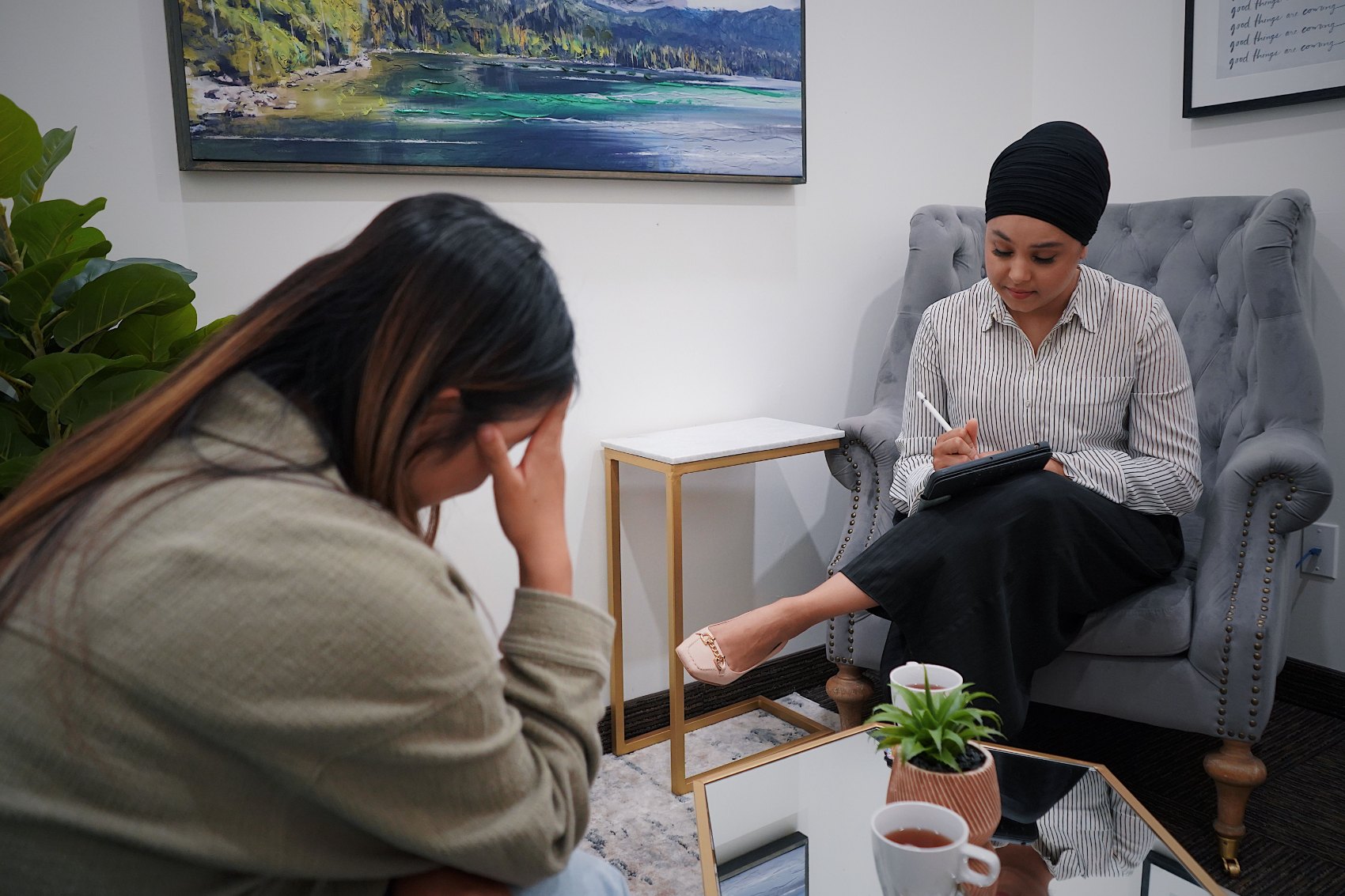
Our individual therapy sessions give you a private, judgment-free space to process the transition to parenthood at your own pace.
3. Antidepressant Medication
For moderate to severe symptoms, or when therapy alone is not enough, antidepressants can be very effective. Selective serotonin reuptake inhibitors (SSRIs) are commonly used, and several have a long track record of use during breastfeeding. Your provider will weigh the benefits and risks with you and choose the option that fits your situation.
Antidepressants usually take 4 to 8 weeks to reach full effect. Sleep, appetite, and energy often improve before mood does. Regular psychiatry and medication management visits help fine-tune the dose and track progress.
4. Newer Medications Designed for Postpartum Depression
In 2023, the FDA approved zuranolone (Zurzuvae), the first oral medication developed specifically for postpartum depression in adults. It is taken once daily for 14 days, and in clinical trials it improved depressive symptoms more quickly than traditional antidepressants for many women with severe PPD.
Zuranolone is not right for everyone. It can cause significant drowsiness, carries a warning against driving for at least 12 hours after each dose, and has specific guidance around breastfeeding. A psychiatric provider can review whether it is an appropriate part of your postpartum depression treatment plan.
5. Group Support and Peer Connection
Postpartum depression thrives on isolation. Hearing other parents say “me too” can be powerful medicine. Group therapy combines peer connection with skilled clinical guidance, helping you practice coping skills alongside people who truly understand.
Nonprofit organizations like Postpartum Support International also offer free online support groups for mothers, fathers, and families.
6. Sleep, Nutrition, and Daily Recovery Habits
Lifestyle changes are not a replacement for professional postpartum depression treatment, but they make every other treatment work better. Helpful habits include:
- Protecting one longer stretch of sleep: trade night feeds with a partner or family member when possible
- Eating regularly: simple, protein-rich snacks keep energy and mood more stable
- Gentle movement and daylight: a short walk with the stroller can ease tension
- Accepting help: let others handle meals, laundry, or older siblings
7. Telehealth Follow-Up Care
Getting a newborn out the door for postpartum depression treatment appointments can feel impossible. Virtual visits remove that barrier. After your initial in-person evaluation, many HarmonyVille patients continue care through telehealth psychiatry, joining follow-up appointments from home during nap time.
What to Expect at Your First Postpartum Depression Treatment Visit
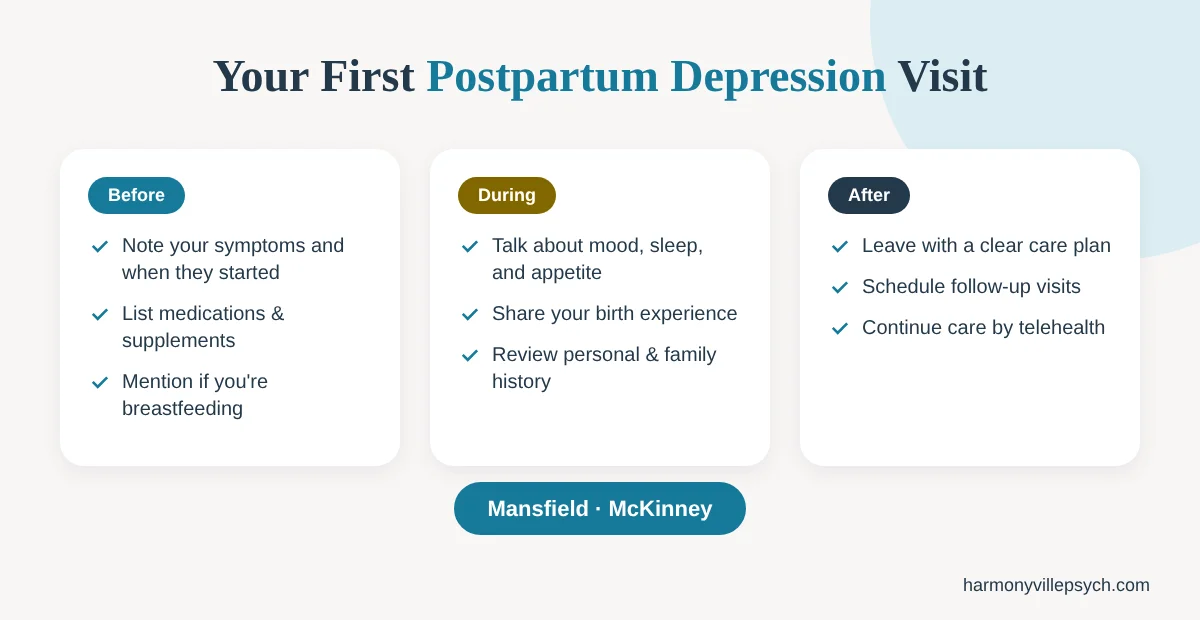
Knowing what happens at a first appointment can make it much easier to book one. Here is what a typical first visit for postpartum depression treatment at HarmonyVille looks like.
Before Your Visit
Jot down your main symptoms, when they started, and how they affect your day. Bring a list of any medications or supplements you take, and note whether you are breastfeeding. If it helps, ask your partner or a trusted friend what changes they have noticed. You are welcome to bring your baby with you.
During Your Visit
Your provider will ask about your mood, sleep, appetite, anxiety, birth experience, and support at home. They will also ask about your mental health history and your family’s history. Nothing you share will shock your provider. Honest answers simply help them recommend the right postpartum depression treatment for you.
After Your Visit
You will leave with a clear plan. That may include therapy, medication, lifestyle steps, or a combination. Your provider will schedule follow-up visits to check how you are responding and adjust your postpartum depression treatment as you recover. Follow-ups can often happen by telehealth.
Planning Ahead: Postpartum Mental Health During Pregnancy
If you are pregnant and have a history of depression or anxiety, you do not have to wait and see. Prevention is a real option. The U.S. Preventive Services Task Force recommends that pregnant and postpartum people at increased risk be referred to counseling to help prevent perinatal depression.
A prenatal visit with a psychiatric provider can help you:
- Review whether current medications should continue during pregnancy
- Identify your personal early warning signs
- Build a support plan for sleep, feeding, and help at home
- Know exactly who to call if symptoms start after delivery
With a plan in place, postpartum depression treatment can begin within days instead of months if you need it.
How Partners and Family Can Help
Partners and loved ones are often the first to notice that something is wrong. You can help by:
- Listening without judgment and avoiding phrases like “just enjoy the baby”
- Taking over night feedings or chores so she can rest
- Helping schedule the first appointment and offering a ride or childcare
- Watching for warning signs that suggest an emergency
Partners can struggle, too. Research suggests that about 1 in 10 new fathers experience depression in the year after a baby is born. If you are a partner who feels low, irritable, or disconnected, you deserve support as well.
Common Myths That Delay Postpartum Depression Treatment
Misconceptions keep many parents from getting care they deserve. Here are a few we hear often.
- Myth: “If I loved my baby enough, I wouldn’t feel this way.” Postpartum depression is a medical condition, not a measure of love. Many parents with PPD love their babies deeply.
- Myth: “It will go away once I get more sleep.” Rest helps, but true postpartum depression usually needs professional care to improve.
- Myth: “Treatment means I have to stop breastfeeding.” Many postpartum depression treatment options are compatible with breastfeeding. Your provider will help you weigh the choices.
- Myth: “Only mothers get postpartum depression.” Partners, adoptive parents, and parents after pregnancy loss can all experience depression, too.
- Myth: “I should be able to handle this on my own.” Strength looks like asking for support. Postpartum depression treatment is a sign of resilience, not weakness.
Why Early Postpartum Depression Treatment Matters
Untreated postpartum depression rarely resolves on its own. It can last for months, strain relationships, and affect bonding, feeding, and sleep routines. Early postpartum depression treatment protects both you and your child.
Seeking help is also an act of caregiving. When a parent’s mental health improves, babies benefit from a more responsive, connected caregiver. Getting help is not selfish. It is good parenting.
Postpartum Depression Treatment in Mansfield and McKinney, TX
HarmonyVille offers compassionate, evidence-based postpartum depression treatment for families across Dallas-Fort Worth. Our psychiatrists and psychiatric nurse practitioners provide:
- Comprehensive psychiatric evaluations for new and expecting parents
- Medication management with careful attention to pregnancy and breastfeeding
- Individual and group therapy
- Convenient telehealth follow-up visits
Visit our Mansfield, TX clinic or our McKinney, TX clinic to learn more about each location. Wondering about coverage? Our insurance and costs page explains what to expect. You can also explore our broader depression treatment services.
Frequently Asked Questions About Postpartum Depression
How long does postpartum depression last?
Without care, postpartum depression can last for many months or longer. With postpartum depression treatment, many people notice improvement within a few weeks of starting therapy or medication. Your timeline depends on symptom severity, how early you begin care, and the treatment you choose.
Can postpartum depression start months after giving birth?
Yes. While most cases begin in the first couple of months, symptoms can develop any time during the first year after delivery. Some people also notice symptoms around weaning or when returning to work. If you feel a shift in your mood at any point, it is worth checking in with a provider.
Can I take antidepressants while breastfeeding?
Many women do. Several antidepressants have been studied in breastfeeding mothers and are commonly prescribed. Every situation is unique, so your provider will review your health history and your baby’s needs before recommending a medication. Please do not start or stop any medication without medical guidance.
Will my baby be taken away if I say I’m struggling?
This is one of the most common fears new parents have, and it keeps many from asking for help. Mental health providers want to support you and your family. Sharing symptoms of depression, anxiety, or intrusive thoughts is the first step toward getting better, and it is exactly what your care team is there to help with.
Where can I get help right now?
The National Maternal Mental Health Hotline offers free, confidential support 24/7 by call or text at 1-833-852-6262 (1-833-TLC-MAMA), in English and Spanish. In a crisis, call or text 988 or call 911.
Take the First Step Toward Feeling Like Yourself Again
You do not have to wait until things get worse, and you do not have to figure this out alone. Postpartum depression treatment at HarmonyVille is personal, judgment-free, and built around life with a new baby.
Request an appointment today or call our Mansfield office at 682-341-3040 or our McKinney office at 682-708-2797. Our team will help you find a time that works for you and your family.