If the season everyone calls “the most wonderful time of the year” leaves you feeling drained, flat, or quietly overwhelmed, you are not alone, and you are not doing the holidays wrong. Holiday depression is a real and common experience. At HarmonyVille, our psychiatric providers and therapists in Mansfield and McKinney, TX see it every November and December, and we know it responds well to the right support.
This guide explains what holiday depression is, how it differs from the “holiday blues” and seasonal affective disorder, the warning signs worth paying attention to, and seven proven ways to protect your mental health between Thanksgiving and the New Year.
Table of Contents
What Is Holiday Depression?
Holiday depression is a term for the sadness, low mood, anxiety, and exhaustion many people feel during the holiday season. It is not a separate diagnosis in the DSM-5. Instead, it describes a pattern: the stress, expectations, memories, and disrupted routines of the holidays either trigger new depressive symptoms or make existing ones worse.
For some people, holiday depression is a short dip that lifts once January arrives. For others, the season exposes something deeper, such as major depression, an anxiety disorder, or unresolved grief, that deserves real care rather than a “just push through it” approach.
How Common Is Holiday Stress?
More common than most people admit. In a 2023 American Psychological Association survey, 89% of U.S. adults said something causes them stress during the holiday season. The top reasons were money (58%), finding the right gifts (40%), and missing family or loved ones (38%).
For people already living with a mental health condition, the impact is often stronger. In a National Alliance on Mental Illness (NAMI) survey, 64% of respondents with a mental illness said the holidays make their condition worse.
Holiday Depression vs. Holiday Blues vs. Seasonal Depression
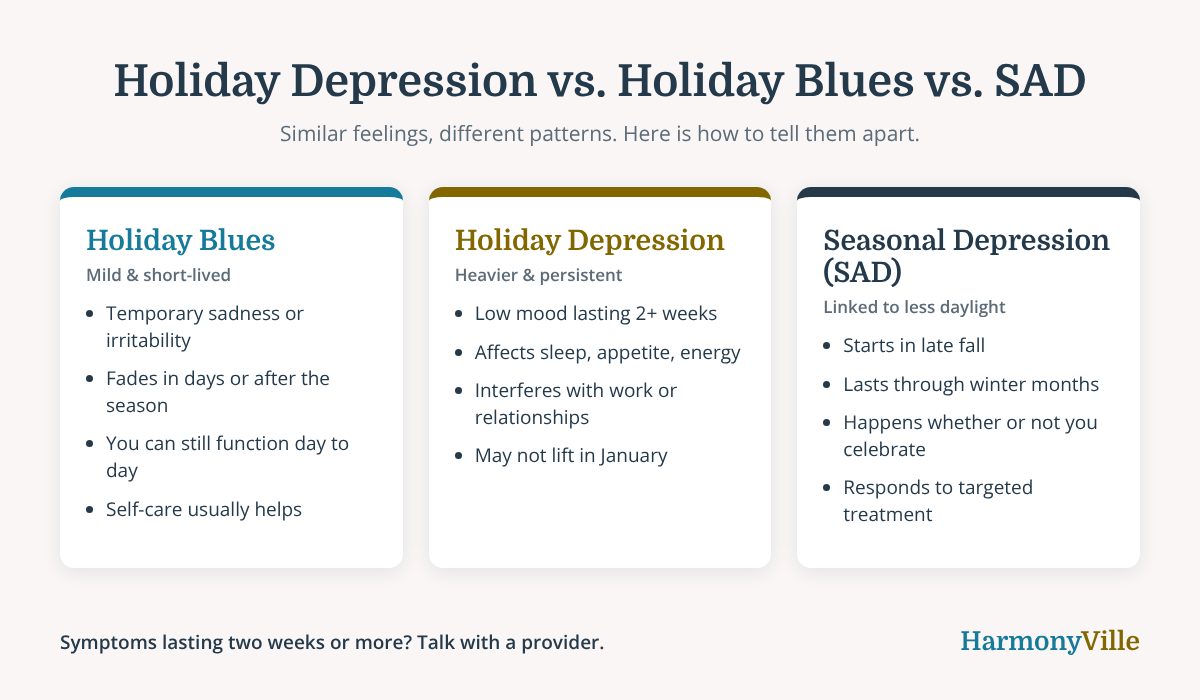
These three terms get used interchangeably, but they are not the same thing. Knowing the difference helps you decide what kind of support you need.
- Holiday blues: Temporary sadness, irritability, or fatigue tied to holiday stress. It usually fades within a few days or once the season ends, and it does not stop you from functioning.
- Holiday depression: Low mood that is heavier and more persistent, lasting two weeks or longer and affecting sleep, appetite, energy, work, or relationships. It may be triggered by the holidays, but it does not always lift on January 2.
- Seasonal affective disorder (SAD): A form of depression linked to shorter daylight hours. It typically begins in late fall and continues through winter, whether or not you celebrate anything. Learn more in our guide to seasonal depression treatment.
It is possible to have more than one at the same time. A person with SAD, for example, may find their symptoms spike during holiday gatherings. That overlap is one reason a professional evaluation is so useful.
What Causes Holiday Depression?
There is rarely a single cause. Most of the time, holiday depression grows out of several pressures stacking on top of each other.
Financial Pressure
Gifts, travel, hosting, and year-end bills can strain any budget. Money worries are the most commonly reported source of holiday stress, and financial strain is closely linked to anxiety and low mood.
Grief and Loneliness
The holidays have a way of highlighting who is missing. The first season after a death, divorce, move, or estrangement can be especially painful. People who live alone or far from family may feel isolated while everyone around them seems to be celebrating.
Unrealistic Expectations
Social media, movies, and family traditions set a high bar for the “perfect” holiday. When reality falls short, many people feel guilt, disappointment, or the sense that they are failing.
Family Conflict and Old Patterns
Gatherings can reopen old tensions, bring difficult relatives into the same room, or pull adults back into roles they outgrew years ago. For survivors of trauma, holiday events can also bring up painful memories.
Disrupted Routines
Late nights, travel, rich food, more alcohol, and less exercise all affect mood. Shorter days and less sunlight in November and December add another layer, especially for people prone to seasonal depression.
Signs of Holiday Depression to Watch For
Everyone has a rough day during the holidays. What matters is how long the symptoms last and how much they interfere with daily life. Common signs of holiday depression include:
- Persistent sadness, emptiness, or tearfulness
- Losing interest in activities or traditions you usually enjoy
- Feeling exhausted even after rest
- Sleeping much more or much less than usual
- Changes in appetite or weight
- Irritability, frustration, or a short temper with loved ones
- Trouble concentrating or making decisions
- Withdrawing from friends, family, or invitations
- Drinking more alcohol to cope
- Feelings of hopelessness, guilt, or worthlessness
If several of these signs last two weeks or longer, it is time to talk with a professional. Our depression treatment team can help you sort out what is happening and what will help.
If you are having thoughts of harming yourself or feel unsafe, call or text 988 to reach the 988 Suicide & Crisis Lifeline any time, day or night, or call 911.
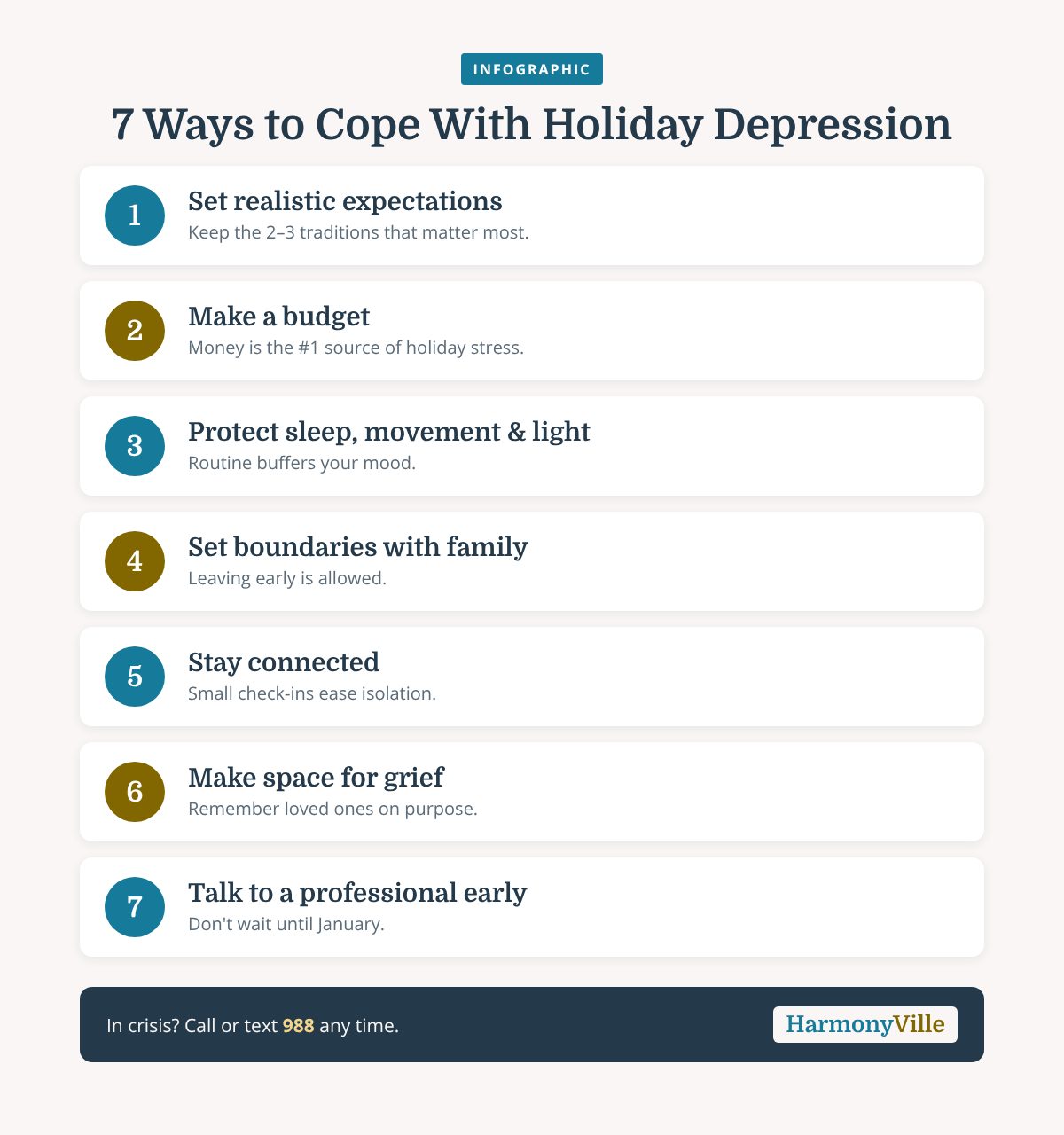
7 Proven Ways to Cope With Holiday Depression
You cannot control everything about the holiday season, but you can change how much of it lands on you. These evidence-informed strategies are the same ones our clinicians recommend to patients every year.
1. Set Realistic Expectations
Let go of the idea that the holidays have to be perfect. Choose the two or three traditions that matter most to you and give yourself permission to skip, simplify, or change the rest. A smaller, calmer holiday is still a real holiday.
2. Make a Budget and Stick to It
Because money is the top source of holiday stress, a clear spending plan is one of the most protective steps you can take. Consider gift exchanges, homemade gifts, or shared experiences instead of expensive presents. Most people remember time together far more than what was in the box.
3. Protect Your Sleep, Movement, and Light
Routine is one of the strongest buffers against holiday depression. Try to keep consistent sleep and wake times, get outside in daylight when you can, and move your body most days, even if it is just a 15-minute walk. Limit alcohol, which can deepen low mood and disrupt sleep.
4. Set Boundaries With Family
You are allowed to leave a gathering early, decline an invitation, or step outside for a breather. Plan ahead for difficult conversations: decide which topics you will not discuss and how you will exit politely. Boundaries are not rude. They are how you stay well enough to show up at all.
5. Stay Connected, Even in Small Ways
Isolation feeds depression. If you cannot be with family, schedule a video call, invite a friend for coffee, join a community event, or volunteer. Helping others is one of the most reliable ways to lift your own mood during the holidays.
6. Make Space for Grief
If you are missing someone this year, you do not have to pretend otherwise. Light a candle, cook their favorite recipe, share a story, or set aside quiet time to remember them. Acknowledging grief often makes it feel lighter than trying to push it away.
7. Talk to a Professional Early
Do not wait until January if you are already struggling. A therapist can help you build coping skills for stressful situations, and a psychiatric provider can evaluate whether medication or a change in your current treatment would help. Early support often keeps holiday depression from turning into a longer depressive episode.
Holiday Depression in Children and Teens
Kids and teenagers can experience holiday depression too, but they often show it differently than adults. Instead of saying they feel sad, a child may become clingy, irritable, or have more meltdowns. Teens may withdraw to their rooms, sleep at odd hours, or seem unusually angry or flat.
Common holiday triggers for young people include:
- Splitting time between two households after a separation or divorce
- Breaks from school routines, friends, and structured activities
- Comparing their holidays and gifts to what they see on social media
- Tension or conflict between adults at family gatherings
- Grief over a grandparent, pet, or friend who is no longer there
Keep routines as steady as you can, give children a simple preview of what each event will look like, and make room for downtime between gatherings. If changes in mood, sleep, or behavior last more than two weeks, our child and adolescent psychiatry team can help.
Common Myths About Holiday Depression
Misunderstandings keep many people from getting help during the season when they need it most. Here are a few myths about holiday depression we hear often.
Myth: “It’s just the holidays. I’ll snap out of it.”
Sometimes low mood does lift on its own. But if symptoms have lasted for weeks, or you notice the same pattern every year, waiting it out can mean losing months to depression that is very treatable.
Myth: “Other people have it worse, so I shouldn’t complain.”
Holiday depression is not a competition. Your stress, grief, or sadness is valid even if your life looks fine from the outside, and you do not need to hit rock bottom before asking for support.
Myth: “Getting help means I’ll be on medication forever.”
Treatment is personal. Some people benefit from therapy alone, some from short-term medication, and some from a combination. Your provider will explain the options and you stay part of every decision.
Myth: “There’s no time to start treatment during the holidays.”
Telehealth visits, flexible scheduling, and short-term therapy make it possible to get care even in a busy month. Starting now also means you head into the new year with support already in place.
Build Your Holiday Mental Health Plan
A little planning in early November can prevent a lot of stress in late December. Think of this as a simple plan you can write on one page and keep on your phone.
- Name your priorities. List the three events or traditions that matter most. Everything else is optional.
- Know your triggers. Identify the people, places, or situations that tend to drain you, and decide in advance how you will handle them.
- Schedule recovery time. Block out quiet evenings or a slow morning after big gatherings, the same way you would schedule the gatherings themselves.
- Choose your support people. Pick one or two people you can text when things get hard, and let them know ahead of time.
- Keep your care on the calendar. If you already see a therapist or psychiatric provider, book your December appointments now. Refill prescriptions before travel and holiday office closures.
- Plan for January. Put something you look forward to on the calendar for after the holidays, so the season does not end with an empty feeling.
People who already live with depression or anxiety benefit most from this kind of plan, because holiday depression often shows up when routines and support slip at the same time.
When to Get Help for Holiday Depression
Self-care strategies help many people, but they are not a substitute for treatment when symptoms are significant. Reach out for professional support if:
- Your low mood has lasted two weeks or longer
- You are struggling to work, care for your family, or get out of bed
- You are relying on alcohol or other substances to get through the day
- Your usual treatment no longer seems to be working
- You have a history of depression, bipolar disorder, or anxiety and notice symptoms returning
- You feel hopeless or have thoughts of not wanting to be here
Asking for help with holiday depression is not an overreaction. It is the fastest way to feel like yourself again.
How HarmonyVille Treats Holiday Depression in Mansfield and McKinney, TX
At HarmonyVille Mental & Behavioral Health Services, care starts with listening. Your first visit includes a thorough evaluation of your symptoms, history, and goals, so your plan fits you rather than a template. Depending on your needs, treatment may include:
- Psychiatric evaluation and medication management with board-certified psychiatric providers. Learn more about our psychiatry services.
- Individual therapy, including cognitive behavioral therapy (CBT) to change the thought patterns that keep depression going. Explore individual therapy at HarmonyVille.
- Group therapy, which offers connection and support from people who understand what you are going through.
- Advanced options such as TMS therapy and ketamine-based treatment for some patients whose depression has not responded to other approaches. A provider can help you decide whether these are right for you.
- Telehealth visits for eligible patients, so busy schedules, travel, or bad weather do not have to delay care. See how telehealth psychiatry in Texas works.
We see adults, teens, and children at our Mansfield and McKinney offices, and many patients can be seen within days rather than months.
Frequently Asked Questions About Holiday Depression
Is holiday depression a real diagnosis?
Holiday depression is not an official diagnosis on its own, but the symptoms are real. A clinician may diagnose an adjustment disorder, major depressive disorder, or seasonal pattern depression depending on how long symptoms last and how severe they are.
How long does holiday depression last?
Mild holiday blues usually fade within a few days or once the season ends. If low mood continues for two weeks or more, or carries into January and February, it may be clinical depression or seasonal affective disorder that benefits from treatment.
Why do I feel worse after the holidays are over?
Many people experience a post-holiday slump. The excitement ends, routines restart, bills arrive, and winter days are still short. If the “January blues” linger or deepen, talk with a provider rather than waiting it out.
Can therapy help with holiday stress and anxiety?
Yes. Therapy gives you practical tools for managing stress, setting boundaries, handling family conflict, and working through grief. Short-term therapy before or during the holiday season can make a meaningful difference. Our anxiety treatment services can also help if worry is a big part of what you feel.
How can I support a loved one with holiday depression?
Check in without pressure, listen more than you advise, and include them in plans while letting them choose their level of involvement. Offer to help them find professional care, and if you are ever worried about their safety, call or text 988.
Get Support for Holiday Depression This Season
You do not have to white-knuckle your way through another difficult holiday season. Whether you are dealing with holiday stress, grief, or depression that seems to return every winter, HarmonyVille’s team in Mansfield and McKinney, TX is here to help you feel steady again.
Book your appointment today. Request an appointment online or call our Mansfield office at 682-341-3040 or our McKinney office at 682-708-2797. Early support can help you enjoy the moments that matter this season.
This article is for educational purposes and is not a substitute for professional medical advice. If you are in crisis, call or text 988 or call 911.