Major depressive disorder treatment works, and for most people it works best when it is matched to the person, not pulled off a shelf. If you have been feeling heavy, flat, or exhausted for weeks, and the things that used to bring you joy now feel like chores, you may be living with more than a rough patch. The good news is that depression is one of the most treatable conditions in mental health care, and you do not have to figure out the next step on your own.
In this guide, our team at HarmonyVille walks through the most effective options for major depressive disorder treatment, what each one involves, how long it usually takes to feel a difference, and how to know when it is time to reach out. Whether you live near our Mansfield or McKinney, TX offices or are exploring telehealth care, you will leave with a clear picture of what real help looks like.
Table of Contents
What Is Major Depressive Disorder?
Major depressive disorder (MDD), sometimes called clinical depression, is a medical condition that affects how you feel, think, sleep, eat, and handle daily life. It is not a character flaw, and it is not something you can simply “snap out of.” According to the National Institute of Mental Health, depression is among the most common mental health conditions in the United States, affecting millions of adults every year.
A provider may diagnose MDD when several of the following symptoms last most of the day, nearly every day, for at least two weeks:
- Persistent sadness, emptiness, or hopelessness
- Loss of interest or pleasure in activities you once enjoyed
- Changes in appetite or weight
- Sleeping too much or too little
- Fatigue or low energy, even after rest
- Feeling slowed down, or restless and agitated
- Feelings of worthlessness or excessive guilt
- Trouble concentrating, remembering, or making decisions
- Thoughts of death or suicide
Depression can look different from person to person. Some people feel deep sadness. Others mostly feel numb, irritable, or worn out. Some keep up with work and family while struggling quietly, which we cover in our guide to high-functioning depression.
What Causes Major Depressive Disorder?
There is rarely a single cause. MDD usually develops from a mix of factors, including genetics and family history, changes in brain chemistry and stress hormones, major life events such as loss or trauma, chronic medical conditions, hormonal shifts, certain medications, and ongoing stress or isolation. Understanding your personal risk factors helps your provider recommend the most effective major depressive disorder treatment for you.
How Major Depressive Disorder Treatment Works
Effective major depressive disorder treatment starts with an accurate picture of what is going on. Depression often overlaps with anxiety, ADHD, trauma, sleep problems, thyroid issues, or bipolar disorder, and each of those changes which treatment makes sense. That is why a thorough evaluation comes first.
From there, most treatment plans follow a few simple principles:
- Personalized: your symptoms, history, preferences, and goals shape the plan.
- Measured: progress is tracked with standardized rating scales, not guesswork.
- Adjustable: if one approach is not helping enough, the plan changes.
- Collaborative: you are part of every decision, from therapy style to medication choices.
Mild depression may respond well to therapy alone. Moderate to severe depression usually responds best to a combination of therapy and medication. When depression does not improve after a couple of well-tried medications, advanced options such as TMS or esketamine may be considered.
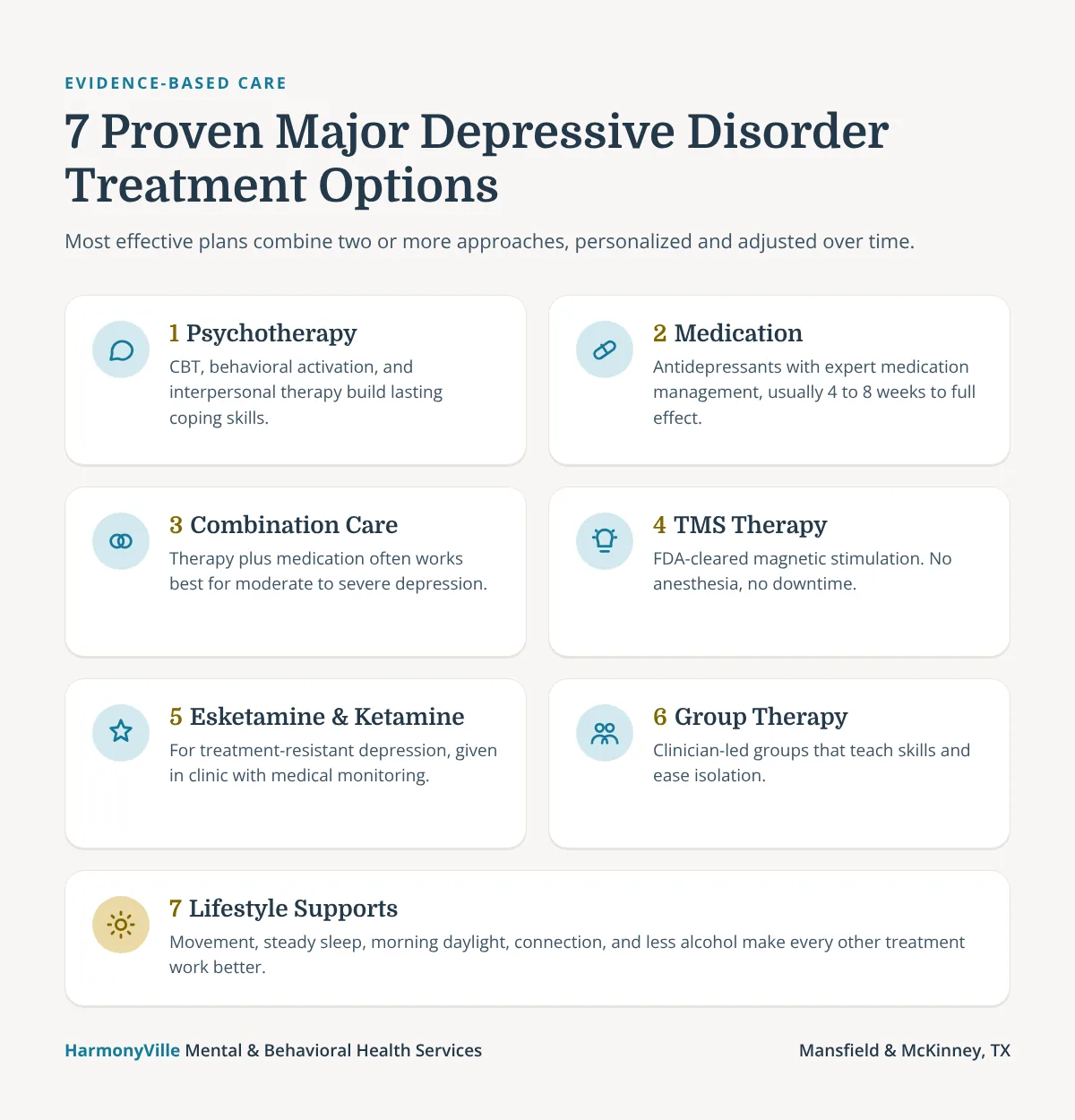
7 Proven Major Depressive Disorder Treatment Options
Below are the evidence-based options a psychiatric provider may recommend. Many people use more than one at the same time, and the best major depressive disorder treatment plan often blends two or three of these approaches.
1. Psychotherapy (Talk Therapy)
Psychotherapy is a core part of major depressive disorder treatment for most people. Working with a licensed therapist helps you understand your patterns, build coping skills, and change the thoughts and habits that keep depression going. Common approaches include:
- Cognitive behavioral therapy (CBT): identifies and reshapes unhelpful thought patterns.
- Behavioral activation: gradually rebuilds routines and rewarding activities.
- Interpersonal therapy (IPT): focuses on relationships, role changes, and grief.
- Acceptance and commitment therapy (ACT): builds flexibility and values-based action.
Most people attend weekly sessions for 12 to 20 weeks, though the right length depends on your goals. Learn more about individual therapy at HarmonyVille.
2. Antidepressant Medication and Medication Management
Medication is one of the most widely used forms of major depressive disorder treatment. Antidepressants help rebalance the brain chemistry involved in mood, sleep, and energy. Commonly prescribed options include SSRIs, SNRIs, bupropion, and mirtazapine. Each has different benefits and side effects, so the best choice depends on your symptoms and health history.
A few things are helpful to know before you start:
- Most antidepressants take about 4 to 8 weeks to reach their full effect.
- Side effects are often mild and many fade within the first few weeks.
- It can take more than one try to find the right medication or dose.
- Never stop an antidepressant suddenly without talking to your provider.
This is where expert psychiatry and medication management makes a real difference. Regular follow-ups let your provider fine-tune the dose, manage side effects, and switch strategies early if needed.
3. Combination Therapy
For moderate to severe depression, research consistently shows that combining medication with psychotherapy tends to work better than either one alone. Medication can lift the fog enough to engage in therapy, while therapy builds skills that help prevent relapse after medication is tapered. At HarmonyVille, psychiatric providers and therapists work under one roof, which makes coordinated major depressive disorder treatment easier to access.
4. Transcranial Magnetic Stimulation (TMS)
TMS uses focused magnetic pulses to stimulate the areas of the brain that regulate mood. It is FDA-cleared as a major depressive disorder treatment and is often recommended when depression has not improved with medication, or when side effects make medication difficult to tolerate.
TMS requires no anesthesia and no recovery time. You sit in a comfortable chair during brief sessions, then drive yourself home or back to work. A typical course involves daily weekday sessions over several weeks. The National Institute of Mental Health offers a helpful overview of brain stimulation therapies. You can also explore TMS therapy in Mansfield and McKinney.
5. Esketamine and Ketamine-Based Therapy
For adults with treatment-resistant depression, the FDA has approved esketamine (Spravato), a nasal spray given in a certified clinic under medical supervision. Ketamine-based treatments act on a different brain pathway (glutamate) than traditional antidepressants, and some patients notice changes faster than with standard medication.
Because these treatments require careful screening and in-office monitoring, eligibility is always decided during a consultation with a psychiatric provider. Learn more on our ketamine therapy page.
6. Group Therapy and Peer Support
Depression often makes people feel isolated, as if no one else could understand. Group therapy counters that directly. Led by a trained clinician, groups teach coping skills while giving you a space to hear from others who truly get it. Many people use group therapy alongside individual sessions or medication. Read more about the benefits of group therapy.
7. Lifestyle Supports That Strengthen Recovery
Healthy habits do not replace professional care, but they make every other major depressive disorder treatment work better. Helpful supports include:
- Movement: regular physical activity, even a 20-minute walk, can improve mood.
- Sleep: a consistent sleep and wake time supports emotional regulation.
- Daylight: morning light exposure helps reset your internal clock.
- Connection: scheduled time with supportive people reduces isolation.
- Limiting alcohol: alcohol is a depressant and can worsen symptoms and interact with medication.
Start small. One manageable change practiced daily beats an ambitious plan you cannot sustain.
What If Treatment Isn’t Working?
If you have tried two or more antidepressants at an adequate dose and duration without enough relief, you may have what clinicians call treatment-resistant depression. This is more common than many people realize, and it does not mean you are beyond help. It means your major depressive disorder treatment plan needs to change.
Next steps a provider may consider include:
- Re-checking the diagnosis for conditions such as bipolar disorder, ADHD, or thyroid problems
- Adjusting the dose, switching medications, or adding an augmenting medication
- Adding or changing the style of psychotherapy
- Moving to advanced options such as TMS or esketamine
- Referral for other brain stimulation therapies, such as electroconvulsive therapy (ECT), for severe cases
The most important thing is to keep the conversation going with your provider. Feeling stuck is information, not failure.
What to Expect at Your First Major Depressive Disorder Treatment Visit
Taking the first step is often the hardest part. Knowing what happens next can make it easier.
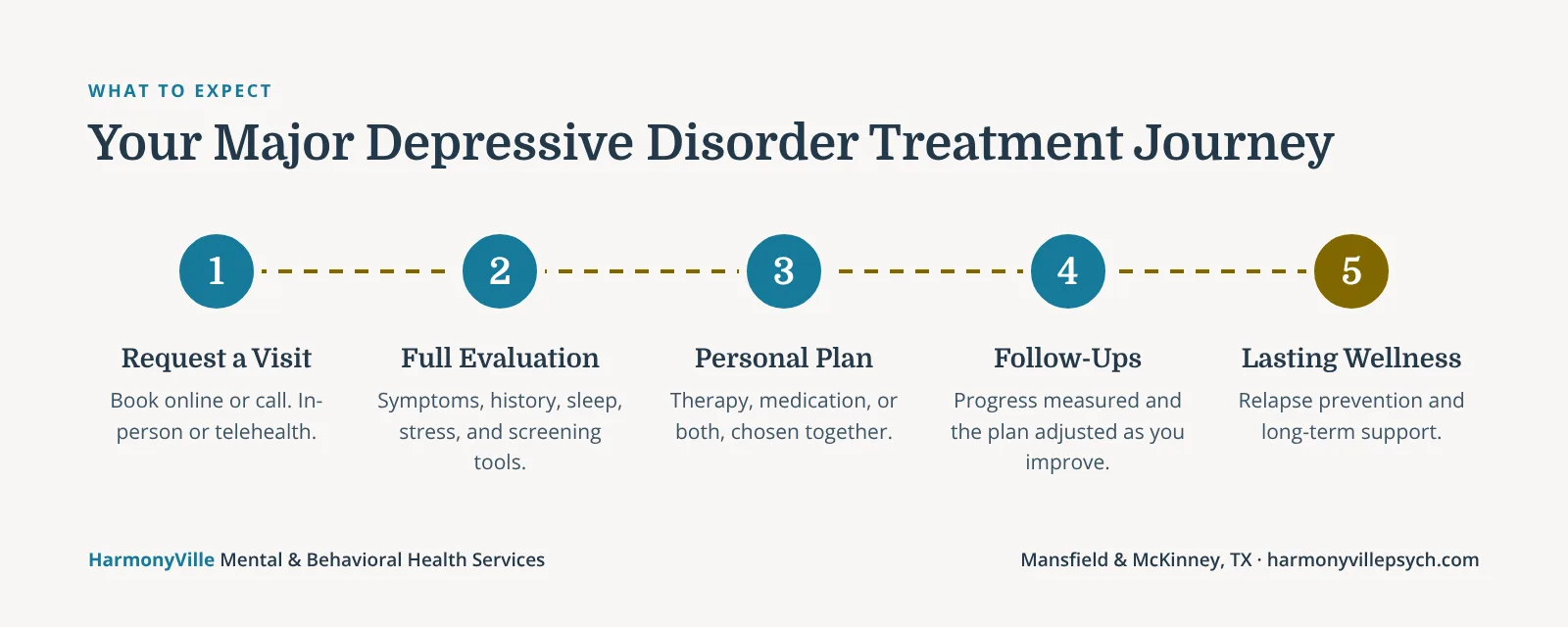
- Request an appointment: book online or call either office. Telehealth visits are also available.
- Comprehensive evaluation: your provider asks about symptoms, sleep, stress, medical history, and family history, and may use standardized questionnaires.
- Personalized plan: together you choose a starting approach, such as therapy, medication, or both.
- Regular follow-ups: progress is measured and your major depressive disorder treatment is adjusted as you improve.
- Long-term wellness: once you feel better, the focus shifts to preventing relapse.
Major Depressive Disorder Treatment for Teens and Young Adults
Depression in teens can look different than it does in adults. Instead of obvious sadness, parents may notice irritability, falling grades, withdrawal from friends, changes in sleep, or a sudden loss of interest in sports and hobbies. These changes are easy to mistake for a “phase,” but persistent shifts deserve a closer look.
Major depressive disorder treatment for young people usually leans heavily on therapy, especially CBT and family involvement. When medication is recommended, a child and adolescent psychiatric provider chooses options carefully and monitors closely, particularly in the first weeks. Parents play a big role, too: staying connected, keeping routines steady, and communicating openly with the care team all support recovery. Learn more about child and adolescent psychiatry at HarmonyVille.
How to Choose the Right Major Depressive Disorder Treatment Provider
The right provider can make major depressive disorder treatment feel less overwhelming. As you compare options, look for a practice that offers:
- Board-certified psychiatric providers who can diagnose, prescribe, and manage medication
- Licensed therapists trained in evidence-based approaches such as CBT
- Measurement-based care that tracks your progress with validated tools
- Advanced options like TMS or esketamine if first-line care is not enough
- Flexible access, including telehealth and reasonable wait times
- A good fit: you should feel heard, respected, and comfortable asking questions
Having psychiatry, therapy, and advanced treatments in one practice means fewer handoffs and a more coordinated major depressive disorder treatment plan.
Supporting a Loved One Through Depression Treatment
If someone you love is struggling, your support can make a real difference. Listen without trying to fix everything. Encourage them to keep appointments and take medication as prescribed. Offer practical help, like a ride to a visit or company on a walk. Celebrate small wins, since recovery is rarely a straight line. And take care of yourself, too: supporting someone with depression is meaningful work, and you deserve support as well.
Signs It’s Time to Seek Help for Depression
You do not need to wait until things feel unbearable. Consider reaching out if:
- Low mood or numbness has lasted two weeks or longer
- You are struggling to keep up at work, school, or home
- Sleep, appetite, or energy have changed noticeably
- You are pulling away from friends and family
- You are relying on alcohol or other substances to cope
- Self-help strategies have not been enough
Reaching out early matters. The sooner major depressive disorder treatment begins, the sooner symptoms can ease, and the less time depression has to affect your health, relationships, and work.
If you are having thoughts of suicide or self-harm, call or text 988 to reach the 988 Suicide & Crisis Lifeline, available 24/7. If you are in immediate danger, call 911.
Major Depressive Disorder Treatment in Mansfield and McKinney, TX
HarmonyVille Mental & Behavioral Health Services offers compassionate, evidence-based major depressive disorder treatment for adults, teens, and children across North Texas. Our team provides psychiatric evaluations, medication management, individual and group therapy, TMS, and ketamine-based care, all coordinated in one place.
Visit our Mansfield, TX mental health clinic or our McKinney, TX location, or connect with a provider from home through telehealth psychiatry. You can also explore our full depression treatment services.
Frequently Asked Questions About Major Depressive Disorder Treatment
How long does major depressive disorder treatment take to work?
It depends on the approach. Many people notice early improvements in sleep, energy, or appetite within 2 to 4 weeks of starting an antidepressant, with fuller benefits around 4 to 8 weeks. Therapy often shows meaningful progress within 6 to 12 sessions. A course of TMS usually runs several weeks. Your provider will track your progress and adjust the plan if improvement is slower than expected.
Can major depressive disorder go away completely?
Yes, many people reach remission, meaning their symptoms fade to the point where they feel like themselves again. Because depression can return, especially after multiple episodes, providers often recommend continuing treatment for a period after you feel better and learning early warning signs so you can act quickly if symptoms come back.
Do I need medication, or can therapy alone treat depression?
Mild depression often improves with psychotherapy alone. For moderate to severe depression, combining therapy and medication typically works best. The right choice depends on your symptoms, history, and preferences, and your provider will talk through the pros and cons of each option with you.
What is the difference between sadness and major depressive disorder?
Sadness is a normal reaction to loss or disappointment and usually eases with time. Major depressive disorder lasts at least two weeks, affects most of the day nearly every day, and interferes with sleep, appetite, energy, concentration, work, or relationships. If low mood is getting in the way of daily life, it is worth an evaluation.
Does HarmonyVille accept insurance for depression treatment?
HarmonyVille works with many insurance plans, including Medicaid. Coverage varies by plan, so please call our Mansfield or McKinney office and our team will help verify your benefits before your first visit.
Take the First Step Toward Feeling Like Yourself Again
Depression can make every step feel heavy, including asking for help. But the right major depressive disorder treatment can bring back energy, focus, and the sense of hope that depression takes away. You deserve care that listens, adjusts, and walks with you the whole way.
Our providers in Mansfield and McKinney are ready to help you build a plan that fits your life. Schedule a confidential consultation today, or call our team to talk through your options.
This article is for educational purposes only and is not a substitute for professional medical advice, diagnosis, or treatment. Always speak with a qualified healthcare provider about your specific situation.