You get up, go to work, answer the emails, show up for your family, and maybe even look like you have it all together. But inside, everything feels heavy, flat, or exhausting, and it has for a long time. If that sounds familiar, you may be living with high-functioning depression. At HarmonyVille, our psychiatric providers and therapists in Mansfield and McKinney, TX help people who are “fine” on the outside and struggling on the inside every week.
This guide explains what high-functioning depression is, the warning signs that are easy to miss, why it so often goes untreated, and the proven treatment options that can help you feel like yourself again.
Table of Contents
What Is High-Functioning Depression?
High-functioning depression is a term people use to describe depression that does not stop you from meeting your daily responsibilities. You keep working, parenting, studying, and socializing, but you do it while carrying persistent sadness, low energy, self-criticism, or a sense of emptiness that never fully lifts.
It is not a formal diagnosis in the DSM-5. Clinically, what people call high-functioning depression often overlaps with persistent depressive disorder (PDD), formerly known as dysthymia. It can also describe major depression in someone who has become very skilled at masking their symptoms.
High-Functioning Depression and Persistent Depressive Disorder
Persistent depressive disorder is a chronic, lower-grade form of depression. To be diagnosed in adults, depressed mood must be present on most days for at least two years, along with other symptoms such as fatigue, poor sleep, appetite changes, low self-esteem, or trouble concentrating.
According to the National Institute of Mental Health, an estimated 1.5% of U.S. adults experience persistent depressive disorder in a given year, and about 2.5% experience it at some point in their lives. Because so many people with PDD keep functioning, many of them never seek care.
9 Warning Signs of High-Functioning Depression
The signs of high-functioning depression are often quieter than people expect. Friends, coworkers, and even family members may never notice. Here are nine warning signs to watch for in yourself or someone you love.
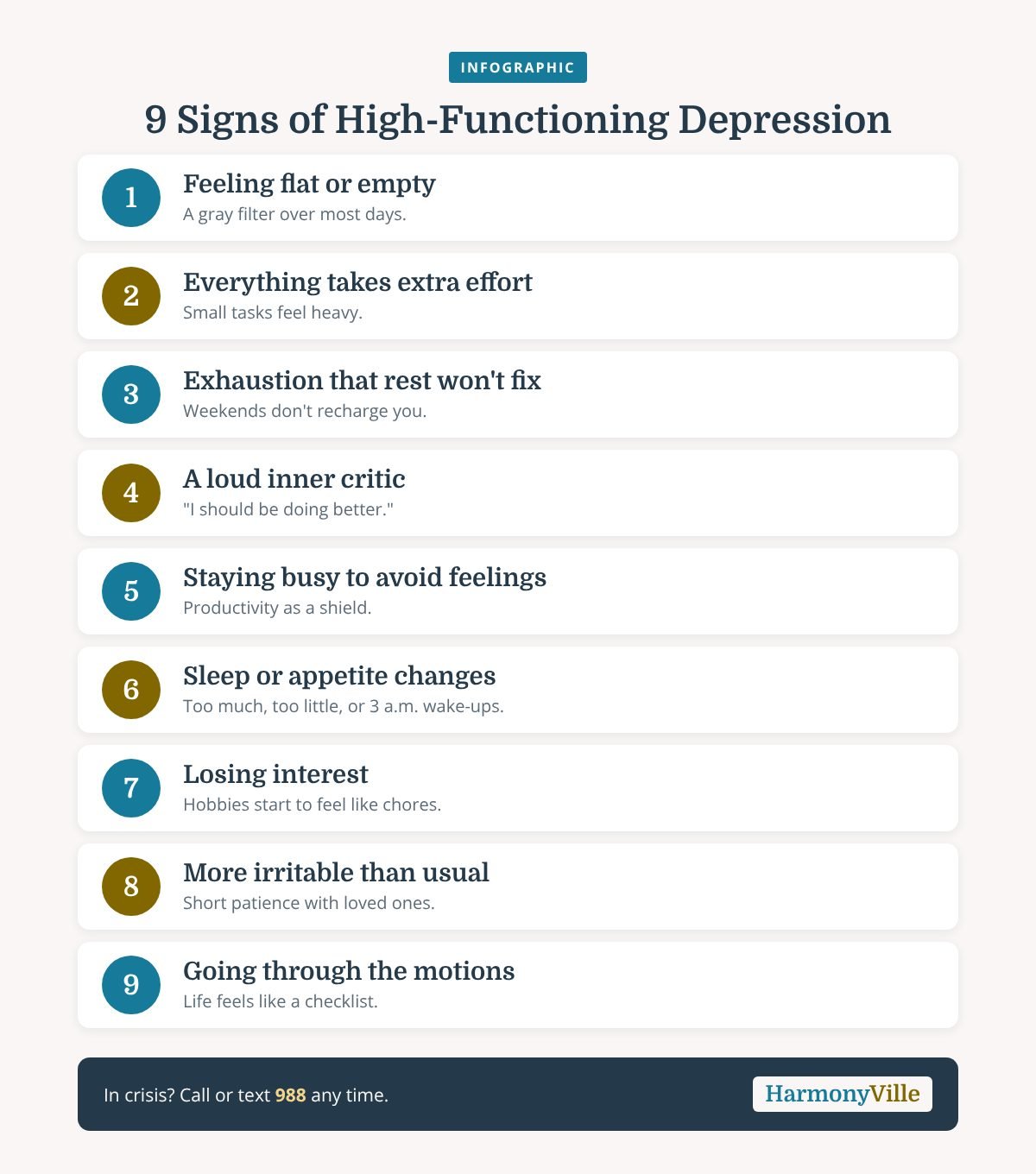
1. You Feel Flat or Empty Most Days
Instead of dramatic sadness, many people describe a constant gray filter over life. Good news does not land the way it should, and you rarely feel truly excited or content.
2. Everything Takes More Effort Than It Should
You still get things done, but even small tasks like answering a text, cooking dinner, or making a phone call feel like pushing through mud.
3. You Are Exhausted No Matter How Much You Rest
Fatigue is one of the most common signs of high-functioning depression. Weekends and vacations do not seem to recharge you.
4. Your Inner Critic Is Loud and Relentless
You hold yourself to high standards and judge yourself harshly when you fall short. Thoughts like “I should be doing better” or “I’m not good enough” run in the background all day.
5. You Stay Busy to Avoid Your Feelings
Overworking, overscheduling, and constant productivity can be a way to avoid slowing down long enough to notice how you really feel.
6. Your Sleep or Appetite Has Changed
You may sleep too much or wake up at 3 a.m. unable to fall back asleep. Some people lose their appetite, while others eat more for comfort.
7. You Have Lost Interest in Things You Used to Enjoy
Hobbies, friendships, and activities that once felt meaningful now feel like obligations or simply fall away.
8. You Are More Irritable Than Usual
Depression does not always look sad. Short patience, frustration, and snapping at loved ones can all be signs of high-functioning depression, especially in men and teens.
9. You Feel Like You Are Just Going Through the Motions
Life feels like a checklist to get through rather than something you are living. You may tell yourself this is just what adulthood feels like.
If several of these signs have lasted for weeks, months, or years, it is worth talking with a professional. Our depression treatment team can help you understand what you are experiencing.
Why High-Functioning Depression Often Goes Untreated
People with high-functioning depression are often the last to ask for help. Here is why it is so easy to overlook.
- You are still succeeding. Good grades, promotions, or a busy social life can make it hard to believe anything is wrong.
- It has lasted so long it feels normal. When low mood has been present for years, people mistake it for their personality.
- You compare yourself to others. “Other people have it worse” is one of the most common reasons people delay care.
- Stigma and self-reliance. Many high achievers believe they should be able to fix it themselves.
- Symptoms are hidden well. Masking takes a lot of energy, but it works well enough that no one asks if you are okay.
The problem is that untreated depression rarely stays the same. Over time, it can deepen into a major depressive episode, strain relationships, affect physical health, and contribute to burnout, anxiety, or substance use.
High-Functioning Depression vs. Burnout vs. Major Depression
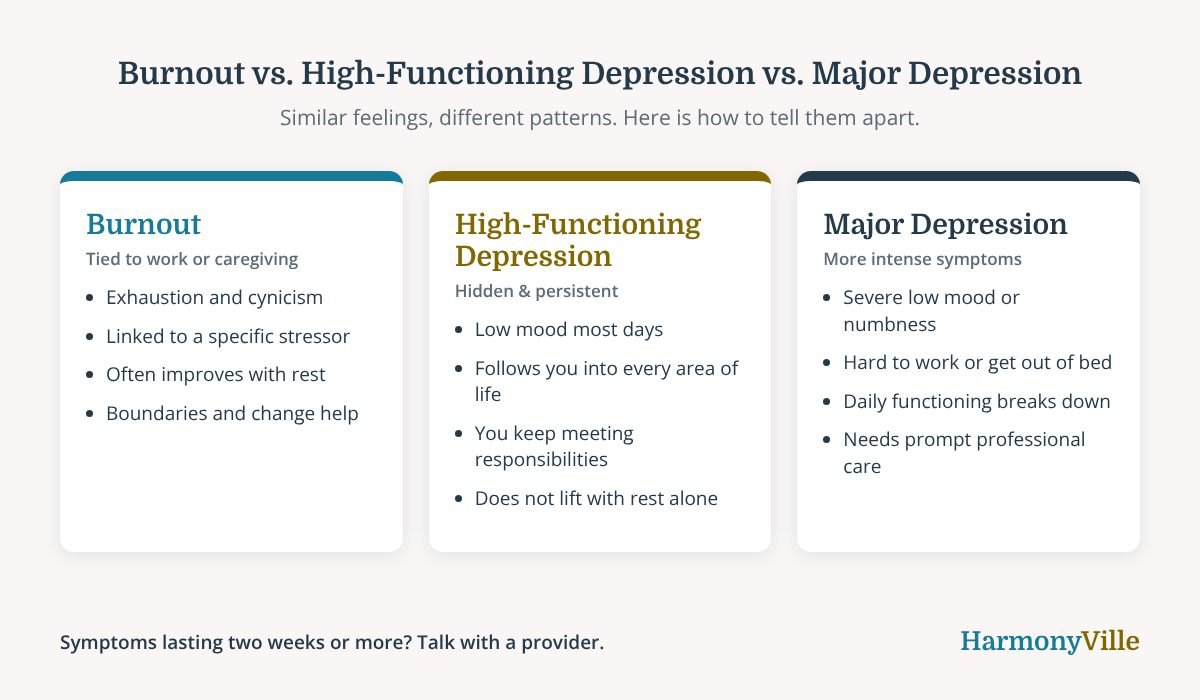
These experiences can feel similar, and they often overlap. Understanding the differences can help you decide what kind of support you need.
- Burnout: Exhaustion, cynicism, and reduced effectiveness tied mainly to work or caregiving stress. It often improves with rest, boundaries, or a change in circumstances.
- High-functioning depression: Persistent low mood, self-criticism, and fatigue that follow you into every area of life, including weekends and vacations. It does not lift just because the stressor is removed.
- Major depression: More intense symptoms that significantly interfere with daily functioning, such as being unable to work, get out of bed, or care for yourself.
It is possible to move between these states. Burnout can trigger depression, and high-functioning depression can turn into a major depressive episode. A professional evaluation helps sort out what is happening.
What Causes High-Functioning Depression?
There is usually no single cause. Most people develop high-functioning depression through a combination of factors, including:
- Genetics and family history of depression or other mood disorders
- Brain chemistry and differences in how the brain regulates mood and stress
- Chronic stress from work, finances, caregiving, or relationships
- Early life experiences, including trauma, loss, or growing up with high pressure to perform
- Personality traits such as perfectionism and a strong need to please others
- Medical conditions, including thyroid problems, chronic pain, and sleep disorders
- Other mental health conditions, especially anxiety, ADHD, or PTSD
Understanding your own mix of causes is part of building a treatment plan that actually fits.
How Is High-Functioning Depression Diagnosed?
Diagnosis starts with a conversation. During a psychiatric evaluation, a provider asks about your mood, energy, sleep, appetite, concentration, and how long symptoms have been present. They also ask about your medical history, family history, substance use, and the stressors in your life.
Your provider may use brief screening questionnaires and may recommend lab work to rule out medical causes such as thyroid problems or vitamin deficiencies. The goal is not to label you. It is to understand what is driving your symptoms so treatment can target the right things.
Treatment Options for High-Functioning Depression
The good news is that high-functioning depression responds well to treatment. Many people are surprised by how much lighter life feels once they get the right support. Common treatment options include:
Psychotherapy
Talk therapy is often the first step. Cognitive behavioral therapy (CBT) helps you notice and change the harsh, all-or-nothing thinking that keeps depression going. Other approaches, such as interpersonal therapy and acceptance-based therapies, can help with relationships, perfectionism, and self-compassion. Learn more about individual therapy at HarmonyVille.
Medication Management
For many people, antidepressant medication can lift the heaviness enough for therapy and daily life to feel manageable again. A psychiatric provider will review your symptoms and history, explain options, and adjust treatment over time. Explore our psychiatry and medication management services.
Combined Care
Research consistently shows that combining therapy and medication often works better for chronic depression than either approach alone. At HarmonyVille, your psychiatric provider and therapist can coordinate care under one roof.
Advanced Options for Treatment-Resistant Depression
If several treatments have not helped, options such as TMS therapy may be considered for some patients. A provider can help you decide whether advanced treatment is appropriate. Learn more about TMS therapy.
Everyday Habits That Support Recovery
Lifestyle changes are not a replacement for treatment, but they help. Regular movement, consistent sleep, daylight exposure, limiting alcohol, and staying connected with people you trust can all support your recovery.
Try to think of these habits as part of your treatment plan rather than another set of things to get perfect. Start with one change, such as a ten-minute walk after lunch or a regular bedtime, and build from there. Progress, not perfection, is what helps your mood and energy recover over time.
High-Functioning Depression in Teens and Young Adults
Teens and young adults are especially good at hiding depression behind good grades, sports, jobs, and busy social calendars. Parents may assume a teen who is still getting As cannot be struggling.
Signs to watch for in young people include:
- Constant exhaustion or sleeping much more on weekends
- Irritability, defensiveness, or pulling away from family
- Harsh self-criticism or extreme perfectionism about school or sports
- Frequent headaches or stomachaches without a clear cause
- Spending more time alone or online and less time with close friends
If you notice these patterns, start a calm, curious conversation and consider an evaluation. Our child and adolescent psychiatry team works with families to understand what is going on and build a plan together.
What to Expect at Your First Visit
Taking the first step can feel intimidating, especially if you are used to handling everything yourself. Here is what a first appointment at HarmonyVille typically looks like:
- Before the visit: You complete a short intake form about your symptoms, health history, and current medications.
- During the visit: Your provider asks about your mood, sleep, energy, stress, relationships, and goals. You can share as much or as little as you are comfortable with.
- Building a plan: Together, you discuss options such as therapy, medication, lifestyle support, or a combination, and decide what feels right for you.
- Follow-up: Regular check-ins let your provider see what is working and adjust your plan as you start to feel better.
Most people leave their first appointment feeling relieved simply because someone finally understands what they have been carrying.
Small Steps You Can Start Today
While professional care is the most reliable path forward, a few small changes can make the days feel more manageable while you get support in place:
- Name it. Admitting to yourself that you are struggling is a meaningful first step.
- Lower the bar on purpose. Pick one or two tasks that truly matter each day and let the rest wait.
- Tell one person. Share how you are really feeling with someone you trust.
- Protect your basics. Aim for consistent sleep, regular meals, daylight, and a short walk most days.
- Notice your inner critic. When harsh thoughts show up, ask what you would say to a friend in the same situation.
- Book the appointment. Waiting for the “right time” often means waiting too long.
How to Support Someone With High-Functioning Depression
Because high-functioning depression is easy to hide, the people who love someone with it may not realize anything is wrong. If you suspect a friend, partner, or family member is struggling:
- Check in privately and specifically: “You’ve seemed really tired lately. How are you actually doing?”
- Listen without trying to fix everything or minimize what they say
- Avoid comments like “But you have such a great life”
- Offer practical help, like researching providers or driving them to an appointment
- Keep showing up, even if they say they are fine the first time
If you are ever worried about someone’s safety, call or text 988 to reach the 988 Suicide & Crisis Lifeline.
When to See a Professional
It is time to talk to a professional about high-functioning depression if:
- Low mood, emptiness, or exhaustion has lasted two weeks or longer
- You have felt “off” for months or years and assumed it was just your personality
- You are relying on work, alcohol, food, or screens to avoid how you feel
- Your relationships, health, or performance are starting to slip
- You have tried to fix it on your own and it has not helped
- You have thoughts that life is not worth living
If you are in crisis or thinking about harming yourself, call or text 988 or call 911 right away.
Getting Help for High-Functioning Depression in Mansfield and McKinney, TX
At HarmonyVille Mental & Behavioral Health Services, we understand that “functioning” is not the same as feeling well. Our team offers thorough psychiatric evaluations, medication management, individual and group therapy, and advanced treatment options for adults, teens, and children.
Care is personalized, judgment-free, and built around your schedule. Eligible patients can also be seen through telehealth psychiatry in Texas, which makes it easier to fit care into a busy life.
Frequently Asked Questions About High-Functioning Depression
Is high-functioning depression a real condition?
Yes. While “high-functioning depression” is not an official diagnosis, the symptoms are real and often meet the criteria for persistent depressive disorder or major depressive disorder. A clinician can help identify which diagnosis fits.
Can you have depression and still be successful?
Absolutely. Many people with high-functioning depression excel at work or school. Success does not mean you are not struggling, and you do not need to be falling apart to deserve care.
How long does high-functioning depression last?
Without treatment, persistent depressive disorder can last for years. With the right combination of therapy, medication, and support, many people notice meaningful improvement within weeks to a few months.
Does high-functioning depression go away on its own?
It sometimes eases for a period, but it often returns or slowly worsens. Getting treatment early is the most reliable way to feel better and prevent a more serious depressive episode.
What should I say at my first appointment?
Be honest about how long you have felt this way, how it affects your energy and relationships, and what you have tried. You do not need to have the right words. Your provider will guide the conversation.
Take the First Step Toward Feeling Better
You have spent a long time holding everything together. You deserve support that helps you actually feel well, not just get through the day. If you recognize the signs of high-functioning depression in yourself or someone you love, HarmonyVille’s team in Mansfield and McKinney, TX is ready to help.
Schedule your consultation today. Request an appointment online or call our Mansfield office at 682-341-3040 or our McKinney office at 682-708-2797.
This article is for educational purposes and is not a substitute for professional medical advice. If you are in crisis, call or text 988 or call 911.