Bipolar disorder treatment works best when it combines an accurate diagnosis, the right medication, therapy, and steady follow-up care. At HarmonyVille in McKinney, TX, our psychiatric team builds a personalized plan that helps you stabilize your mood, protect your sleep, and get back to the life you want to live.
If you or someone you love has been riding a roller coaster of high-energy weeks followed by crushing lows, you are not imagining it, and you are not alone. Bipolar disorder is a real, treatable medical condition. With the right care, many people live full, stable, and productive lives. This guide walks you through what bipolar disorder treatment looks like, the seven options most plans are built on, and how to get started with a psychiatrist in McKinney.
What Is Bipolar Disorder?
Bipolar disorder is a mental health condition that causes unusual shifts in mood, energy, activity levels, and the ability to carry out daily tasks. These shifts are more intense than the normal ups and downs everyone experiences. According to the National Institute of Mental Health, there are three main types:
- Bipolar I disorder: defined by manic episodes that last at least seven days or are severe enough to need hospital care. Depressive episodes are also common.
- Bipolar II disorder: a pattern of depressive episodes and hypomanic episodes, which are milder than full mania.
- Cyclothymic disorder: long-lasting periods of hypomanic and depressive symptoms that do not meet the full criteria for an episode.
Because each type looks different, the first step in bipolar disorder treatment is always a careful evaluation by a qualified psychiatric provider.
Signs It May Be Time to Seek Bipolar Disorder Treatment
Many people live with symptoms for years before getting the right diagnosis. Consider reaching out to a psychiatrist if you notice patterns like these.
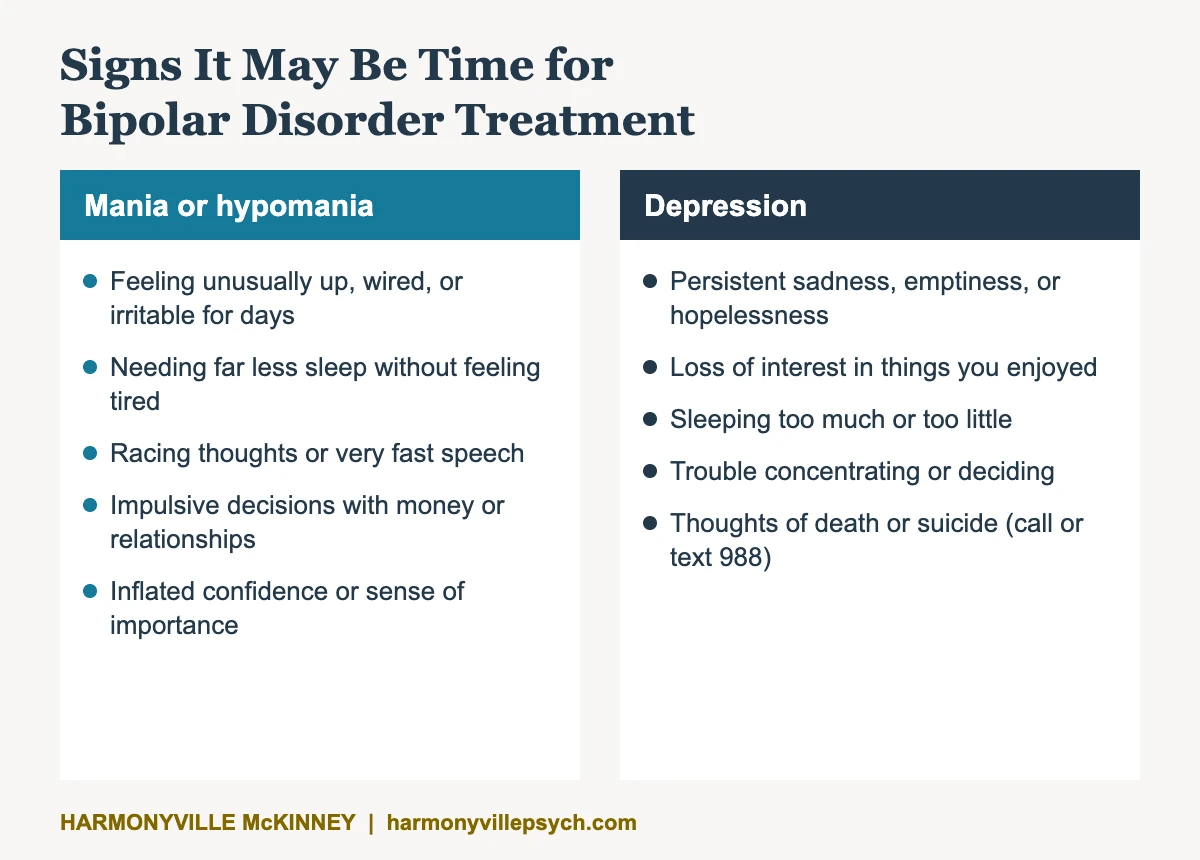
Signs of a manic or hypomanic episode
- Feeling unusually “up,” wired, or irritable for days at a time
- Needing far less sleep without feeling tired
- Racing thoughts or talking much faster than usual
- Taking on many projects at once or making impulsive decisions with money, work, or relationships
- An inflated sense of confidence or importance
Signs of a depressive episode
- Persistent sadness, emptiness, or hopelessness
- Loss of interest in activities you used to enjoy
- Sleeping too much or too little, and feeling exhausted
- Trouble concentrating or making decisions
- Thoughts of death or suicide
If these patterns sound familiar, it is worth talking to a professional. You do not need to be sure it is bipolar disorder before you ask for help. That is what an evaluation is for.
7 Effective Options in Bipolar Disorder Treatment
There is no single “best” treatment that works for everyone. Most effective plans combine several of the options below, adjusted over time as your provider learns what works for you.
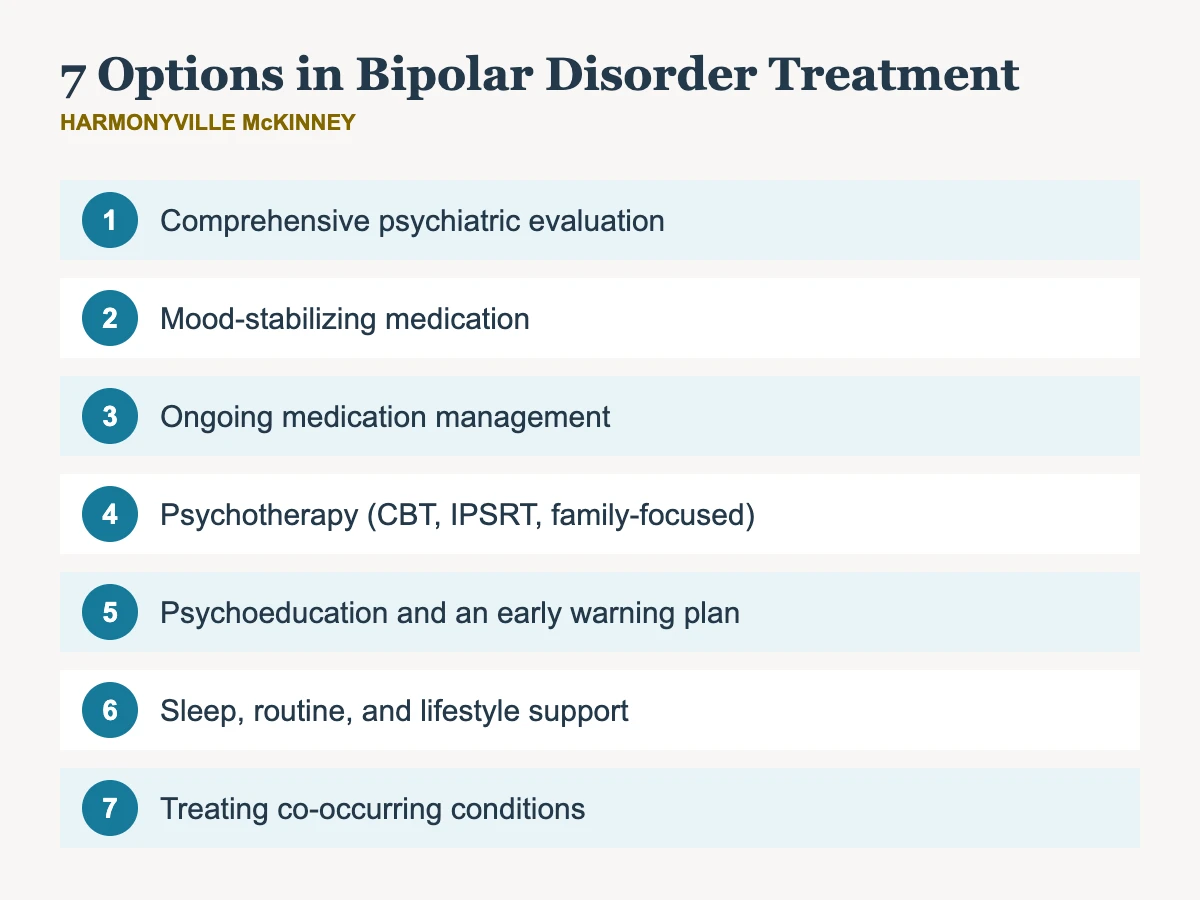
1. A comprehensive psychiatric evaluation
Good care starts with the right diagnosis. During your evaluation, a provider reviews your mood history, sleep, family history, medical conditions, and any substance use. They also rule out other causes, such as thyroid problems or medication side effects. If this is your first visit, our guide on what to expect at your first psychiatric visit can help you feel prepared.
2. Mood-stabilizing medication
Medication is usually the foundation of bipolar disorder treatment. Depending on your symptoms, a psychiatrist may consider mood stabilizers, certain anticonvulsant medications, or atypical antipsychotics. Antidepressants are generally used with caution in bipolar disorder, because on their own they may trigger mania in some people. This is one reason a psychiatric specialist, rather than a general provider, is so valuable here. Your provider will explain the benefits, possible side effects, and any lab monitoring a medication requires.
3. Ongoing medication management
Finding the right medication and dose can take time. Regular follow-up visits let your provider track your mood, adjust doses, manage side effects, and order lab work when needed. Our psychiatry and medication management services are designed for this kind of steady, long-term partnership.
4. Psychotherapy
Medication helps stabilize mood, and therapy helps you build the skills to stay well. Approaches with research support for bipolar disorder include cognitive behavioral therapy (CBT), interpersonal and social rhythm therapy (IPSRT), and family-focused therapy. Therapy can help you spot early warning signs, manage stress, repair relationships, and stay consistent with treatment. Learn more about individual therapy at HarmonyVille.
5. Psychoeducation and an early warning plan
Understanding your own condition is a powerful tool. Psychoeducation is a core part of bipolar disorder treatment. It teaches you and your family how bipolar disorder works, how medications help, and what your personal triggers look like. Together with your provider, you can create a written plan that lists your early warning signs, the steps to take when you notice them, and who to call.
6. Sleep, routine, and lifestyle support
Sleep and mood are tightly linked in bipolar disorder. Even one or two nights of poor sleep can sometimes signal or trigger a mood episode. Keeping a regular sleep schedule, consistent mealtimes, regular physical activity, and limiting alcohol and other substances can all support stability. These habits do not replace bipolar disorder treatment, but they make it work better. Many patients find a simple mood and sleep log helps them and their provider see patterns sooner.
7. Treating co-occurring conditions
Bipolar disorder often shows up alongside anxiety, ADHD, or substance use. Treating these conditions together, instead of one at a time, leads to a clearer picture and a more effective plan. Our adult psychiatry team evaluates the whole person, not just one diagnosis.
Why Bipolar Disorder Is Often Mistaken for Depression
Most people seek help during a low period, not a high one. Hypomania can feel productive or even pleasant, so it often goes unreported. As a result, bipolar disorder is sometimes diagnosed as depression at first. This matters because treatment for depression alone may not be the right fit for someone with bipolar disorder.
If you have been treated for depression and your medication seems to make you restless, irritable, or unable to sleep, or if past treatments have not helped, tell your provider. A fresh evaluation may reveal a different diagnosis. You can also read more about our depression treatment services.
How Bipolar Disorder Treatment Differs From Depression Treatment
Because the two conditions can look alike during a low period, it helps to understand how the treatment approach differs.
| Area of care | Depression treatment | Bipolar disorder treatment |
|---|---|---|
| Main goal | Lift low mood and restore energy | Keep mood stable in both directions, preventing highs and lows |
| Medication focus | Often antidepressants | Usually mood stabilizers or certain antipsychotics, with antidepressants used carefully if at all |
| Monitoring | Watch for improvement in mood | Watch for early signs of both mania and depression, plus lab work for some medications |
| Routine and sleep | Helpful | Essential, since sleep changes can trigger episodes |
Building Your Personal Wellness Plan
A written wellness plan turns good intentions into clear steps you can follow on hard days. Many people find it helpful to work on this plan with their psychiatrist or therapist as part of ongoing bipolar disorder treatment. A strong plan often includes:
- Your daily anchors: regular times for waking, meals, movement, medication, and bedtime.
- Your personal warning signs: for example, sleeping less than usual, spending more, or feeling unusually irritable.
- Your action steps: who you will call, which appointments to move up, and which activities to pause.
- Your support team: names and numbers for your provider, a trusted family member or friend, and crisis lines.
- Your stress reducers: calming activities that help you reset, such as a walk, a quiet routine, or time with supportive people.
Review the plan every few months, or after any change in medication or life circumstances. Small updates keep it useful.
When to Seek Urgent Help
Outpatient care is designed for ongoing support, but some situations need immediate attention. Seek urgent or emergency care if you or a loved one has thoughts of suicide or self-harm, has not slept for several nights and feels out of control, is seeing or hearing things others do not, or is in a situation that puts their safety at risk. Call or text 988, call 911, or go to the nearest emergency room. Once things are safe, our team can help you continue bipolar disorder treatment in an outpatient setting.
Bipolar Disorder Treatment in McKinney, TX: What to Expect at HarmonyVille
When you choose HarmonyVille for bipolar disorder treatment in McKinney, here is what your care typically looks like:
- Reach out: request an appointment online or call our McKinney office. Our team will help you schedule and answer questions about insurance coverage for bipolar disorder treatment.
- Initial evaluation: a psychiatric provider spends time understanding your history, symptoms, and goals.
- Personalized plan: together, you decide on next steps, which may include medication, therapy, lab work, or a combination.
- Follow-up visits: regular check-ins to track progress and fine-tune your plan.
- Long-term support: as your mood stabilizes, visits may become less frequent, but your care team stays available.
Our McKinney clinic serves adults, teens, and children from McKinney, Allen, Frisco, Plano, Prosper, and surrounding Collin County communities. For younger patients, our child and adolescent psychiatry team provides age-appropriate evaluation and care.
How to Support a Loved One With Bipolar Disorder
Watching someone you love struggle with extreme mood swings can be exhausting and frightening. A few steps can make a real difference:
- Learn about the condition. Reliable resources such as NAMI can help you understand what your loved one is experiencing.
- Encourage bipolar disorder treatment without pressure. Offer to help find a provider or drive them to an appointment.
- Notice early warning signs. Changes in sleep, spending, or speech are often the first clues.
- Take care of yourself too. Support groups and your own counseling can help you stay steady.
If you or someone you know is in crisis or having thoughts of suicide, call or text 988 to reach the 988 Suicide and Crisis Lifeline, or call 911. Outpatient care is not a substitute for emergency help.
Bipolar Disorder Treatment for Teens and Young Adults
Bipolar disorder often first appears in the late teens or early twenties. In young people, it can be hard to tell apart from typical moodiness, ADHD, or depression. Signs that deserve a closer look include sudden changes in sleep, unusual irritability that lasts for days, risky behavior that is out of character, or a sharp drop in school performance after a period of high energy.
Early, specialized bipolar disorder treatment can make a real difference. Care for teens usually involves the whole family, with a focus on education, safe medication choices, school support, and healthy routines. If you are a parent in Collin County, our guide on how to help a teen struggling with mental health is a helpful place to start.
Common Myths About Bipolar Disorder
Misinformation keeps many people from seeking bipolar disorder treatment. Here are a few myths we hear often, and the facts behind them.
- Myth: Bipolar disorder just means mood swings. Fact: Everyone has mood changes. Bipolar disorder involves distinct episodes that last days or weeks and affect sleep, energy, thinking, and behavior.
- Myth: People with bipolar disorder cannot hold a job or have healthy relationships. Fact: With consistent care, many people build careers, raise families, and live meaningful lives.
- Myth: Medication changes your personality. Fact: The goal of the right medication is to help you feel like yourself again. If a medication makes you feel flat or unlike yourself, your provider can adjust it.
- Myth: You only need treatment during an episode. Fact: Ongoing bipolar disorder treatment is what helps prevent the next episode, so care continues even when you feel well.
Questions to Ask Your Psychiatrist
Coming to your bipolar disorder treatment appointment with a few questions can help you get the most out of your visit. Consider asking:
- What type of bipolar disorder do you think I have, and why?
- What are the benefits and side effects of the medication you recommend?
- Will I need lab work, and how often?
- How will we know if my bipolar disorder treatment is working?
- What should I do if I notice early warning signs between visits?
- Would therapy or family sessions help in my situation?
For more ideas, see our list of questions to ask your psychiatrist.
Frequently Asked Questions About Bipolar Disorder Treatment
Can bipolar disorder be cured?
Bipolar disorder is a lifelong condition, but it is highly treatable. With consistent bipolar disorder treatment, many people have long stretches of stable mood and are able to work, study, and enjoy their relationships. The goal of treatment is stability and quality of life, and that goal is very achievable.
How long does bipolar disorder treatment take to work?
It varies from person to person. Some people notice improvement within a few weeks of starting medication, while finding the best combination can take a few months. Because bipolar disorder is long-term, most people continue some form of treatment even after they feel well, which helps prevent future episodes.
Can a psychiatrist diagnose bipolar disorder at the first visit?
Sometimes a provider has enough information to make a diagnosis at the first visit. In other cases, they may want to gather more history, speak with family (with your permission), or track your mood over several weeks. A careful diagnosis is worth the extra time, since it shapes every part of your treatment plan.
Does insurance cover bipolar disorder treatment?
Many health insurance plans cover psychiatric evaluations, medication management, and therapy for bipolar disorder, but coverage depends on your specific plan. Our team can help you understand your benefits before your first visit. For more, see our guide to mental health insurance in Texas.
Can bipolar disorder be treated with therapy alone?
For most people, therapy works best alongside medication rather than in place of it. Medication helps stabilize the brain chemistry behind mood episodes, while therapy builds the skills and routines that keep you well. Your provider will talk through the options and help you choose an approach that fits your symptoms and preferences.
Is it safe to stop my medication once I feel better?
Feeling better is often a sign that your bipolar disorder treatment is working, not that you no longer need it. Stopping medication suddenly can raise the risk of a new episode. Always talk with your psychiatrist before making changes, so any adjustments can be made safely and gradually.
Will I need bipolar disorder treatment for the rest of my life?
Most people benefit from some level of long-term care, but what that care looks like changes over time. Early on, visits may be more frequent while you and your provider find the right plan. Once your mood is stable, many people move to less frequent check-ins focused on prevention, medication review, and staying well.
Take the First Step Toward Stability
You do not have to keep guessing what next week will bring. Bipolar disorder treatment at HarmonyVille McKinney gives you a clear diagnosis, a personalized plan, and a care team that stays with you over time.
HarmonyVille McKinney
1400 N Coit Rd, Suite 1803-1804, McKinney, TX 75071
Phone: 682-708-2797
Request an appointment today and talk with a psychiatric provider who understands bipolar disorder.