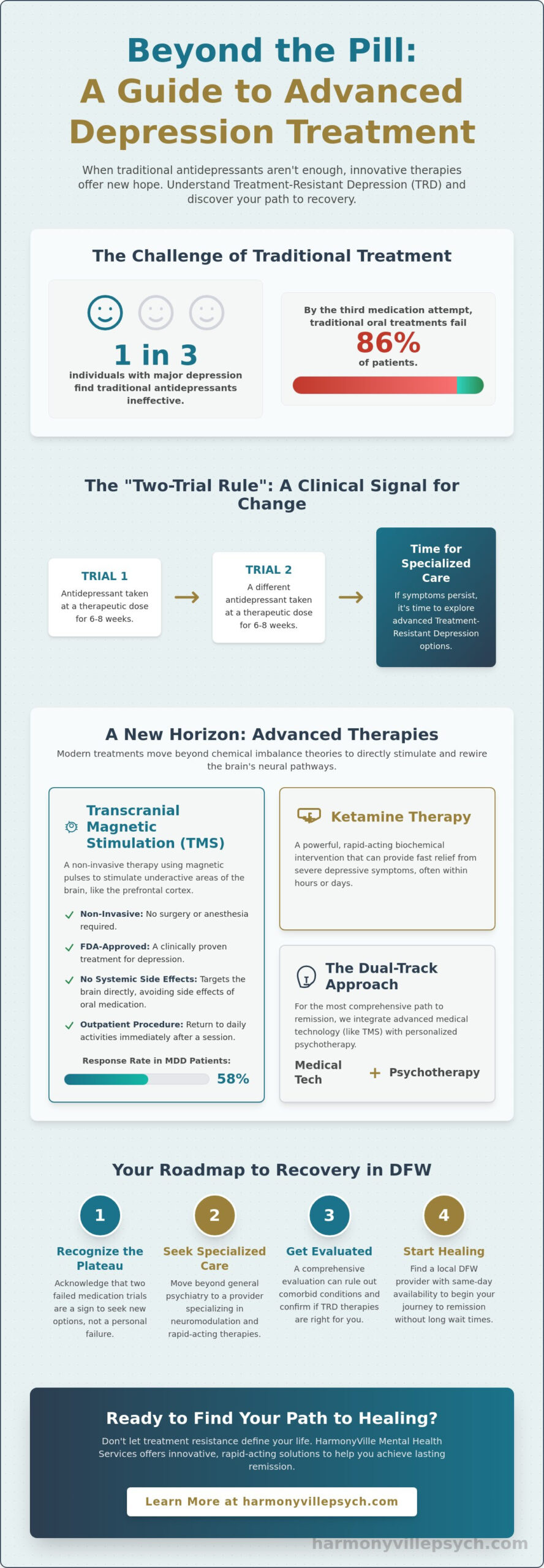
Approximately one-third of individuals diagnosed with major depressive disorder find that traditional antidepressants simply don’t provide the relief they need. If you’ve tried two or more medications without success, you might feel like you’ve failed the treatment, but the reality is that traditional oral medications fail about 86% of patients by the time they reach a third attempt. It’s exhausting to wait weeks for a specialist while your symptoms persist. Exploring treatment-resistant depression options DFW is the first step toward a specialized neuromodulation and rapid-acting therapy framework that moves beyond general psychiatry.
We understand that the prospect of seeking advanced care can be intimidating, especially when you’re worried about invasive procedures or long wait times. You deserve a clear roadmap to recovery that doesn’t involve inpatient stays. In this guide, you’ll discover how innovative therapies like Transcranial Magnetic Stimulation (TMS) and Ketamine are providing rapid relief for your neighbors in North Texas. We’ll also explain how new state laws like Texas Senate Bill 636 are expanding your access to these life-changing services. By the end of this article, you’ll have the tools to find a local DFW provider with same-day availability, ensuring your path to healing starts immediately.
Key Takeaways
- Learn why failing two or more antidepressant trials is a clinical signal to move beyond traditional SSRIs toward specialized neuromodulation.
- Discover advanced treatment-resistant depression options DFW including non-invasive Transcranial Magnetic Stimulation (TMS) and rapid-acting Ketamine therapy.
- Compare the duration, clinical benefits, and time commitments of modern therapies to determine which intervention best fits your lifestyle and recovery goals.
- Understand how to navigate the North Texas healthcare landscape to bypass long waitlists and secure same-day appointments for urgent psychiatric needs.
- Explore the benefits of a dual-track approach that integrates advanced medical technology with personalized psychotherapy for a more comprehensive path to remission.
What is Treatment-Resistant Depression (TRD)?
Understanding What is Treatment-Resistant Depression? begins with recognizing that your experience isn’t a personal failure. In formal clinical terms, TRD occurs when a person doesn’t achieve significant remission after at least two separate trials of antidepressant medications of sufficient dose and duration. It’s a frustrating cycle that many in the Dallas-Fort Worth area know all too well. Approximately one-third of individuals with major depressive disorder don’t respond to standard medications, making the search for specialized treatment-resistant depression options DFW a vital step toward wellness. This classification isn’t a dead end; it’s a signal that your brain requires a more sophisticated, targeted approach than traditional pills can provide.
Sometimes, what feels like treatment resistance is actually a case of misdiagnosis. Conditions like ADHD or OCD often present with symptoms that mimic or overlap with depression, such as chronic fatigue, lack of focus, or intrusive thoughts. If the underlying cause isn’t addressed, standard antidepressants will continue to fall short. A comprehensive psychiatric evaluation is essential to distinguish between true TRD and these comorbid conditions to ensure you aren’t fighting the wrong battle.
The Two-Trial Rule: When to Seek Specialized DFW Care
The “two-trial rule” is the standard benchmark used by psychiatrists to identify when it’s time to pivot. An adequate trial usually involves taking a medication at a therapeutic dosage for a minimum of six to eight weeks. If you’ve completed two such cycles with different classes of drugs and your symptoms haven’t lifted, your current medication management has likely plateaued. Signs of this plateau include:
- Persistent low mood despite taking your medication exactly as prescribed.
- Physical symptoms like brain fog or sleep disturbances that don’t improve.
- A feeling that you’re merely surviving rather than truly living.
Staying on ineffective medications for years can be counterproductive. It often leads to a “learned helplessness” regarding your own recovery. Exploring treatment-resistant depression options DFW early can prevent years of unnecessary struggle and open the door to rapid-acting therapies.
The Biological Reality of Treatment Resistance
The biological reality of TRD is found within the brain’s structural connectivity. While older theories focused heavily on simple chemical imbalances, we now know that TRD significantly affects the prefrontal cortex and specific neural pathways. When these pathways become underactive or “stuck,” the brain loses its plasticity, making it difficult for standard SSRIs to facilitate change. Finding the right treatment-resistant depression options DFW is about moving toward advanced neuromodulation techniques that directly stimulate these dormant areas. Treatment-resistant depression is a clinical classification used to describe a current lack of response to standard therapies, not a permanent or unchangeable state of being.
Advanced Treatment Options for Depression in DFW
When standard medications fail, it can feel like you’ve run out of options. However, the National Institute of Mental Health notes that several advanced therapies are specifically designed for those who don’t respond to initial treatments. Exploring treatment-resistant depression options DFW means looking beyond the pharmacy shelf toward neuromodulation and rapid-acting biochemical interventions. These therapies work by targeting different pathways in the brain than traditional SSRIs or SNRIs, offering a fresh start for your recovery journey.
TMS Therapy: Magnetic Healing Without Systemic Side Effects
Transcranial Magnetic Stimulation, or TMS, represents a significant shift in how we approach persistent depression. Unlike oral medications that must travel through your entire system, TMS uses precise magnetic pulses to stimulate underactive regions of the brain, specifically the prefrontal cortex. This is an entirely non-invasive, FDA-approved outpatient procedure. You remain awake during the session and can drive yourself home or back to work immediately afterward. Research indicates that traditional TMS has a response rate of approximately 58% in patients with major depressive disorder. For those managing busy schedules, finding local access to TMS in Mansfield and McKinney makes these daily sessions much more manageable for DFW commuters.
Ketamine Treatment: A Catalyst for Neural Plasticity
Ketamine therapy offers a different, often faster, route to relief. While traditional antidepressants can take weeks to build up in your system, ketamine acts as a catalyst for neural plasticity. It helps the brain create new connections almost immediately by targeting glutamate pathways rather than serotonin alone. Many patients report a noticeable lift in their mood or a reduction in suicidal ideation within hours or days of their first session. Because safety is paramount, these treatments occur in a controlled, clinical outpatient setting where medical professionals monitor your response. This ensures that the rapid relief you experience is supported by a foundation of clinical safety and professional oversight.
Talk therapy remains a critical pillar of this advanced framework. Even as we use technology to reset neural pathways, individual therapy helps you navigate the emotional shifts that come with recovery. If you’re ready to explore these paths, our team provides comprehensive psychiatry and medication management tailored to your unique biological needs. We focus on a dual-track approach, combining specialized medication management with integrated psychotherapy to ensure your recovery is both deep and lasting. This integrated model addresses both the biological and psychological components of your well-being, helping you regain a sense of stability and hope.
Comparing TRD Options: Which Path is Right for You?
Choosing between the various treatment-resistant depression options DFW can feel overwhelming, but the decision usually rests on your clinical history and your daily schedule. While both Transcranial Magnetic Stimulation (TMS) and ketamine are designed to help those who haven’t found relief through standard care, they offer different paths to recovery. According to the Mayo Clinic, exploring Advanced options for TRD is essential when traditional methods stagnate. It’s about matching the biological mechanism of the treatment to your specific symptoms and life constraints.
TMS vs. Ketamine: A Side-by-Side Analysis
The primary difference between these two modalities is the speed of onset versus the longevity of the results. TMS is often described as a “slow and steady” approach that builds resilience over time. Ketamine is frequently used as a rapid intervention for those in acute distress. A standard course of TMS typically involves daily sessions over six weeks, whereas ketamine therapy often begins with a series of six to eight treatments administered over two to three weeks.
| Feature | TMS Therapy | Ketamine Therapy |
|---|---|---|
| Primary Benefit | Long-term remission; non-systemic. | Rapid relief; high neural plasticity. |
| Insurance (2026) | Widely covered with proof of TRD. | Limited coverage; often out-of-pocket. |
| Experience | Awake; no recovery time needed. | Monitored session; requires a driver. |
For those who are highly sensitive to medication side effects like weight gain or brain fog, TMS is an attractive non-pharmacological route. It doesn’t introduce chemicals into the bloodstream, avoiding systemic complications. Conversely, ketamine is a powerful catalyst for change if you’re experiencing a severe depressive crisis and need symptoms to lift within days rather than weeks.
Assessing Your Readiness for Advanced Therapy
Deciding to move toward advanced care is a significant step. In 2026, Texas Senate Bill 636 has made it easier for many in DFW to access these services by strengthening mental health parity. However, you should still evaluate your readiness with a specialized psychiatrist. Ask yourself these questions before your consultation:
- Have I tried at least two different classes of antidepressants at full dosage?
- Is my current depressive episode significantly interfering with my work or family life?
- Do I have the logistical support to attend frequent outpatient appointments?
- Are my “red flags”—such as persistent suicidal ideation or complete social withdrawal—becoming unmanageable?
Most patients find that an outpatient setting is preferable to inpatient stays, as it allows you to maintain your connection to your home environment while receiving high-level clinical care. If your current medication management feels like it’s just “keeping your head above water,” it’s time to consider an integrated approach that pairs these advanced technologies with consistent psychotherapy.
Navigating Mental Healthcare Access in North Texas
Finding quality mental healthcare in the Dallas-Fort Worth metroplex often feels like a full-time job. While North Texas is home to some of the nation’s leading medical facilities, the demand for specialized services frequently leads to months-long waitlists. This delay is particularly dangerous for those exploring treatment-resistant depression options DFW, where the need for relief is urgent. You shouldn’t have to wait for weeks when you’re already struggling to get through each day. Accessing advanced care shouldn’t be a secondary struggle added to your existing burden.
The Importance of Local, In-Person Outpatient Care
Virtual therapy has its place, but for advanced neuromodulation treatments like TMS, physical proximity is essential. Building a relationship with a DFW-based clinical team provides a level of accountability and personal connection that national virtual platforms can’t replicate. Our offices in Mansfield and McKinney are strategically located to serve the Tarrant and Collin County areas, ensuring that daily or weekly sessions fit into your life without a grueling commute. Being able to look your provider in the eye during a session creates a sense of safety and partnership that is fundamental to the therapeutic process. This local presence allows us to be a stable anchor in your recovery journey.
Same-Day Appointments: Reducing the Barrier to Help
There’s a specific psychological window when a person feels ready to seek help, and we believe that window should never be closed by an automated “next available” message. HarmonyVille is committed to rapid intake for behavioral health needs because we know that same-day appointments can be a lifeline. When you’re ready to explore new treatment-resistant depression options DFW, we’re ready to meet you. This proactive approach minimizes the time spent in the “waiting room of life” and moves you directly into the active phase of healing. To expedite your first evaluation, we recommend bringing the following:
- A detailed list of previous medications, including dosages and duration of use.
- Your current insurance card for immediate verification of benefits.
- Any recent lab work or psychiatric records from previous providers.
- A list of specific symptoms or side effects that have hindered your progress.
Navigating insurance can be intimidating, but recent legislative changes are working in your favor. Texas Senate Bill 636, which took effect January 1, 2026, expanded mental health parity requirements in our state. This means many public health benefit plans must now provide coverage for mental health services that is on par with physical health coverage. We can help you verify your benefits to see how these protections apply to advanced treatments like TMS or specialized medication management. If you are ready to take the next step toward a more stable future, you can schedule a same-day appointment with our specialized team today.
The HarmonyVille Approach to Treatment-Resistant Depression
When you explore treatment-resistant depression options DFW, you aren’t just looking for a machine or a new prescription; you’re looking for a team that sees the whole picture. At HarmonyVille, we believe that true recovery requires more than just a standard diagnosis. We perform personalized psychiatric evaluations that look deep beneath surface-level symptoms to understand your unique biological and emotional landscape. This patient-first philosophy ensures that your journey is validated and that you are empowered to make informed choices about your care. We don’t just treat a condition; we partner with a person.
Expertise in Medication Management and Beyond
Our clinicians specialize in complex cases that haven’t responded to standard protocols. We understand that depression doesn’t always exist in a vacuum. Often, underlying conditions like ADHD or the need for specialized autism evaluations can complicate the recovery process. By integrating these diagnostic tools into our behavioral health services, we provide a more comprehensive path to healing that addresses the root causes of your distress. HarmonyVille Mental Health Services serves as an authoritative guide for DFW mental health, navigating you through complex clinical pathways with clarity and compassion.
Your Path to Remission Starts Here
The intake process at HarmonyVille is designed to be as seamless and supportive as possible. From your very first phone call, our team works to lower your defenses and build immediate trust. We’ve intentionally designed our Mansfield and McKinney office locations as safe harbors, providing a calm and non-judgmental environment where you can feel secure. Your personalized treatment plan is developed during your initial visit, moving you quickly from a state of uncertainty to a structured, proactive path forward. Our commitment to identifying the most effective treatment-resistant depression options DFW ensures that your care plan is as unique as your neurobiology.
You don’t have to navigate this journey alone. Whether you’re seeking a second opinion or are ready to transition to advanced neuromodulation, we’re here to provide the stability and expertise you need. Our doors are open, and our team is ready to help you reclaim your sense of self and hope. To take the first step toward a lasting recovery, Schedule your same-day psychiatric evaluation at HarmonyVille today.
Your Path to Lasting Relief Starts Today
Recovery from persistent depression is possible even when traditional medications have failed you in the past. By shifting focus toward neuromodulation and rapid-acting therapies, you address the structural connectivity of the brain rather than just chemical imbalances. Finding the right treatment-resistant depression options DFW shouldn’t be a journey you take alone or one that involves endless waitlists. You’ve already taken a significant step by educating yourself on the advanced pathways available right here in North Texas.
At HarmonyVille, we provide specialized TMS and Ketamine providers in a safe harbor environment designed for your long-term progress. With convenient locations in Mansfield and McKinney, our team is ready to partner with you to build a personalized roadmap for healing. We offer same-day appointments to ensure that when you’re ready for change, we’re ready to support you with clinical expertise and empathetic care. Our goal is to move you from a state of simply surviving to a place of genuine resilience and well-being.
Book Your Advanced Depression Evaluation at HarmonyVille
You deserve a life that feels manageable and bright again. We’re here to help you find it.
Frequently Asked Questions
How do I know if my depression is considered treatment-resistant?
Depression is clinically classified as treatment-resistant when you haven’t achieved significant remission after at least two separate trials of antidepressant medications. These trials must be of an adequate dose and duration, typically lasting six to eight weeks each. If your symptoms persist despite these efforts, exploring treatment-resistant depression options DFW is the next logical step. This shift allows us to move toward specialized neuromodulation and rapid-acting therapies that target different neural pathways than standard oral drugs.
Is TMS therapy covered by insurance in Texas?
Most major insurance providers in Texas, including Medicare, provide coverage for TMS therapy when it is deemed medically necessary. This typically requires documentation that previous medications have not been effective for your condition. Additionally, Texas Senate Bill 636, which took effect January 1, 2026, has strengthened mental health parity requirements across the state. We recommend a personalized benefits verification during your initial evaluation to confirm your specific coverage details and any prior authorization requirements needed for your treatment plan.
How quickly does Ketamine work for treatment-resistant depression?
Ketamine therapy is known for its rapid-acting properties, with many patients reporting a noticeable lift in mood or reduction in suicidal ideation within hours or days of their first session. Unlike traditional oral medications that can take weeks to build up in your system, ketamine acts as a catalyst for immediate neural plasticity. While the initial relief is often swift, a series of treatments is usually required to stabilize these gains and achieve long-term remission through a structured clinical protocol.
Do I need a referral to see a TRD specialist in DFW?
You don’t need a formal referral from another physician to schedule an evaluation with our specialists at HarmonyVille. We welcome individuals who feel their current treatment has plateaued and are ready to explore advanced intervention methods. During your first visit, we’ll perform a comprehensive psychiatric evaluation to review your medical history and determine if you meet the clinical criteria for TRD. This direct access ensures you can begin your recovery journey without unnecessary administrative delays or long waitlists.
What is the difference between TMS and ECT (Electroconvulsive Therapy)?
The primary difference lies in the level of invasiveness and the method of brain stimulation. TMS is a non-invasive outpatient procedure that uses magnetic pulses to stimulate specific brain regions while you remain fully awake. It requires no anesthesia and has no systemic side effects. In contrast, ECT involves the use of electric currents to intentionally trigger a brief seizure under general anesthesia. While both are effective for TRD, TMS allows you to maintain your daily routine immediately following each session.
Can I continue my current therapy while receiving TMS or Ketamine at HarmonyVille?
We strongly encourage patients to maintain their relationship with their current therapist while undergoing advanced medical treatments. Our “Medication Plus” approach views TMS and ketamine as powerful biological tools that work best when paired with consistent psychotherapy. These advanced therapies can often make talk therapy more effective by increasing neural plasticity and reducing the severity of acute symptoms. We are happy to coordinate care with your existing provider to ensure a seamless and supportive recovery experience throughout your journey.
Are there same-day psychiatry appointments available in McKinney or Mansfield?
Yes, HarmonyVille offers same-day psychiatry appointments at both our McKinney and Mansfield locations to ensure rapid access to care. We understand that waiting weeks for an intake can be a significant barrier for those in a depressive crisis. Our commitment to same-day availability allows us to begin your diagnostic process and discuss treatment-resistant depression options DFW immediately. You can contact our office directly to secure the next available time slot that fits your schedule and start your path to recovery.
What should I do if I am in an immediate mental health crisis in DFW?
If you are experiencing an immediate mental health crisis or thoughts of self-harm, please call or text 988 to reach the Suicide & Crisis Lifeline immediately. You can also visit the nearest emergency room for urgent stabilization. While HarmonyVille provides specialized outpatient care and same-day appointments, we are not a 24/7 emergency crisis intervention facility. Once you are stabilized, we can partner with you to develop a long-term plan for advanced recovery and comprehensive symptom management through our outpatient services.