Insomnia treatment can help you break the cycle of restless nights and exhausted days, and it often improves your mood, focus, and anxiety along the way. If you lie awake replaying the day, wake up at 3 a.m. and can’t drift back off, or dread bedtime because you know sleep won’t come, you are not alone, and you do not have to just push through it.
At HarmonyVille, our psychiatric providers in Mansfield and McKinney, TX, see every day how closely sleep and mental health are connected. This guide explains what insomnia is, how it relates to anxiety and depression, and seven proven insomnia treatment options that can help you finally sleep better.
What Is Insomnia?
Insomnia is a common sleep disorder that makes it hard to fall asleep, stay asleep, or get restful sleep, even when you have the time and a comfortable place to sleep. It is more than one bad night. Insomnia affects how you feel and function during the day.
Clinicians usually describe two types:
- Short-term (acute) insomnia: lasts days to a few weeks and is often triggered by stress, travel, illness, or a major life change
- Chronic insomnia: sleep trouble at least 3 nights a week for 3 months or longer, along with daytime problems like fatigue, irritability, or poor concentration
Short-term sleep problems often fade on their own. Chronic insomnia usually does not, and that is when professional insomnia treatment makes the biggest difference.
Signs You May Need Insomnia Treatment
Everyone has an occasional rough night. Consider talking with a provider if you notice:
- Taking 30 minutes or more to fall asleep most nights
- Waking during the night and struggling to fall back asleep
- Waking up much earlier than you want to
- Feeling unrefreshed even after a full night in bed
- Daytime fatigue, brain fog, or trouble concentrating
- Irritability, low mood, or increased anxiety
- Worrying about sleep itself, or dreading bedtime
- Relying on alcohol or sleep aids most nights to fall asleep
If these patterns have lasted more than a few weeks, it is a good time to explore insomnia treatment rather than waiting for things to improve on their own.
The Link Between Insomnia and Mental Health
Sleep and mental health work in both directions. Poor sleep can make emotional symptoms worse, and mental health conditions can disrupt sleep. That is why insomnia treatment at a behavioral health practice looks at the whole picture, not just the hours you spend in bed.
Insomnia and Anxiety
A racing mind is one of the most common reasons people cannot fall asleep. Anxiety keeps the body on alert, and lying awake can then create new anxiety about not sleeping. Our anxiety disorder treatment services can address both problems together.
Insomnia and Depression
Trouble sleeping is one of the core symptoms of depression, and ongoing insomnia is linked to a higher risk of developing depression later. Treating sleep and mood together often leads to better results than treating either one alone. Learn more about our depression treatment options.
Insomnia and Other Conditions
Sleep changes can also be part of PTSD (including nightmares), ADHD, and bipolar disorder. In bipolar disorder, a sudden drop in the need for sleep can be an early warning sign of a mood episode. A psychiatric provider can help sort out what is driving your sleep problems so your insomnia treatment targets the real cause.
Common Causes of Insomnia
Insomnia rarely has a single cause. Common contributors include:
- Stress: work pressure, finances, relationships, or major life changes
- Mental health conditions: anxiety, depression, PTSD, and others
- Irregular schedules: shift work, jet lag, or inconsistent bedtimes
- Screens and light: late-night phone, tablet, or TV use
- Caffeine, nicotine, and alcohol: especially later in the day
- Medications: some antidepressants, stimulants, steroids, and decongestants
- Medical issues: chronic pain, acid reflux, hormonal changes, or sleep apnea
Identifying your personal triggers is the first step toward an insomnia treatment plan that actually fits your life.
Insomnia Treatment: 7 Proven Ways to Sleep Better
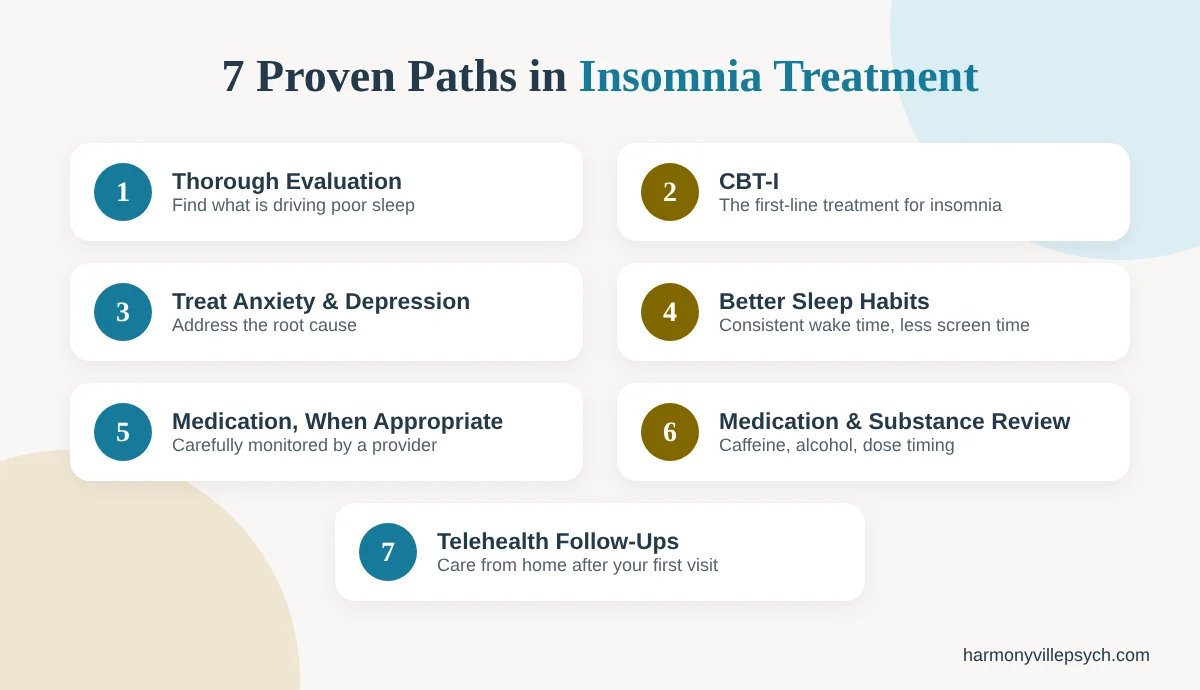
The right insomnia treatment depends on how long your sleep problems have lasted, what is causing them, and your overall health. Here are seven evidence-based options a provider may discuss with you.
1. A Thorough Evaluation
Effective insomnia treatment starts with understanding your sleep. Your provider will ask about your sleep schedule, daytime symptoms, stress, mood, medications, and substance use. You may be asked to keep a sleep diary for one to two weeks to track bedtimes, wake times, and how rested you feel.
If your provider suspects a medical sleep disorder, such as sleep apnea or restless legs syndrome, they may recommend a sleep study or a referral to a sleep specialist.
2. Cognitive Behavioral Therapy for Insomnia (CBT-I)
CBT-I is the recommended first-line insomnia treatment for adults with chronic insomnia. The American College of Physicians recommends it as the initial treatment, ahead of medication. CBT-I is a structured, short-term program that typically includes:
- Stimulus control: retraining your brain to link the bed with sleep, not worry
- Sleep restriction: temporarily limiting time in bed to build stronger, deeper sleep
- Cognitive restructuring: challenging anxious thoughts like “I’ll never function tomorrow”
- Relaxation training: breathing and muscle relaxation to calm the body
- Sleep education: practical habits that support healthy sleep
Unlike sleep medications, the skills you learn in CBT-I keep working after treatment ends. Our individual therapy sessions can help you build these skills, or your provider can guide you to a CBT-I specialist.
3. Treating Underlying Anxiety or Depression
When insomnia is tied to anxiety or depression, treating the underlying condition often improves sleep, too. This may include therapy, medication, or both. Some antidepressants have sedating effects that can be helpful at bedtime, while others can be adjusted if they are disrupting sleep.
4. Better Sleep Habits and Routines
Good sleep hygiene is not a cure on its own, but it strengthens every other insomnia treatment. Helpful habits include:
- Keeping the same wake time every day, including weekends
- Getting morning daylight to anchor your body clock
- Limiting caffeine after noon and avoiding alcohol close to bedtime
- Keeping your bedroom cool, dark, and quiet
- Putting screens away 30 to 60 minutes before bed
- Getting out of bed if you cannot sleep after about 20 minutes, then returning when sleepy
5. Prescription Medication, When Appropriate
For some people, short-term or carefully monitored medication is a helpful part of insomnia treatment. Options include several classes of medicine, such as newer orexin receptor antagonists (for example, suvorexant, lemborexant, or daridorexant), low-dose doxepin, and other agents a provider may consider based on your health history.
Every sleep medication has trade-offs. Some carry risks such as next-day drowsiness, dependence, or falls. The FDA requires a boxed warning on certain sleep medicines, including zolpidem, eszopiclone, and zaleplon, because of rare but serious complex sleep behaviors such as sleepwalking or sleep-driving. Regular psychiatry and medication management visits help make sure any medication is safe, effective, and used for the right length of time.
6. Reviewing Medications and Substances
Sometimes the fix is subtracting rather than adding. Your provider may review whether current prescriptions, the timing of stimulant or antidepressant doses, caffeine, nicotine, alcohol, or cannabis are affecting your sleep. Small changes, like moving a morning dose earlier, can make a meaningful difference.
7. Telehealth Follow-Up Care
Insomnia treatment works best with consistent follow-up to review sleep diaries and adjust the plan. After your initial in-person evaluation, many HarmonyVille patients continue care through telehealth psychiatry, making it easier to stay on track without extra trips to the office.
What About Over-the-Counter Sleep Aids and Melatonin?
Many people try store-bought sleep aids before seeking insomnia treatment. It helps to know their limits:
- Antihistamine sleep aids (such as diphenhydramine or doxylamine) can cause next-day grogginess and confusion, and are generally not recommended for older adults
- Melatonin may help with body-clock issues like jet lag or shift work, but evidence for chronic insomnia is limited, and supplement doses vary widely
- Alcohol may make you drowsy at first but disrupts sleep later in the night
If you rely on any sleep aid most nights, mention it to your provider. It is a sign your sleep problem deserves a full evaluation and a lasting insomnia treatment plan.
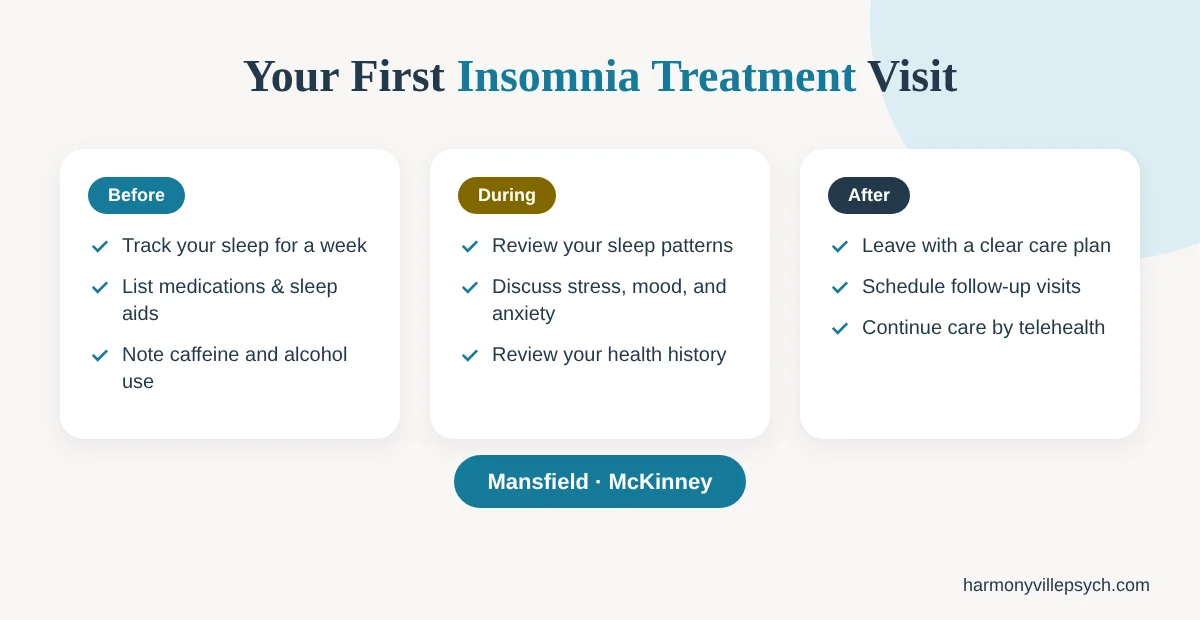
What to Expect at Your First Insomnia Treatment Visit
Knowing what to expect can make it easier to book an appointment. Here is what a typical first visit for insomnia treatment at HarmonyVille looks like.
Before Your Visit
Track your sleep for a week if you can, noting bedtime, wake time, night awakenings, naps, caffeine, and alcohol. Bring a list of medications and supplements, including any sleep aids you have tried.
During Your Visit
Your provider will ask about your sleep patterns, stress, mood, anxiety, health history, and daily routine. Honest answers help them understand whether insomnia is the main issue or part of a bigger picture, so they can recommend the right insomnia treatment for you.
After Your Visit
You will leave with a clear plan, which may include CBT-I strategies, treatment for anxiety or depression, sleep routine changes, or medication. Follow-up visits track your progress, and many can happen by telehealth.
Common Myths That Delay Insomnia Treatment
- Myth: “Everyone needs exactly 8 hours.” Most adults need 7 or more hours, but needs vary. Quality and consistency matter as much as the number.
- Myth: “I can catch up on sleep over the weekend.” Sleeping in can shift your body clock and make Sunday night insomnia worse.
- Myth: “Lying in bed longer will help me sleep more.” Extra time awake in bed often strengthens insomnia. CBT-I actually works partly by limiting it.
- Myth: “Sleeping pills are the only real fix.” CBT-I is the recommended first-line insomnia treatment, and its benefits tend to last.
- Myth: “Insomnia is just stress. It’s not a real problem.” Chronic insomnia is a recognized health condition linked to mood, focus, and physical health, and it is treatable.
How Insomnia Can Look Different at Each Stage of Life
Sleep needs and sleep challenges change over time. Understanding your stage of life helps shape the right approach.
Teens and Young Adults
Teens naturally shift toward later bedtimes, but early school start times, late-night screens, and academic stress can push that into chronic sleep loss. Ongoing insomnia in teens can overlap with anxiety, depression, or ADHD. Our child and adolescent psychiatry team can evaluate sleep alongside mood and attention.
Working Adults and Parents
Long hours, caregiving, shift work, and constant notifications make it hard to switch off at night. For many adults, insomnia starts during a stressful season and lingers long after the stress has passed because the brain has learned to associate bed with being awake. This is exactly the pattern CBT-I is designed to undo.
Women in Midlife
Hormonal changes during perimenopause and menopause, including hot flashes and night sweats, commonly disrupt sleep. Mood changes during this time can add to the problem. Coordinated care between your psychiatric provider and your primary care doctor or OB-GYN can address both sides.
Older Adults
Sleep naturally becomes lighter with age, and older adults are more likely to take medications that affect sleep. Some common sleep aids also carry higher risks of confusion and falls in this group, which makes careful, individualized insomnia treatment especially important.
A Simple Wind-Down Routine to Try Tonight
While you work toward a full plan, a consistent wind-down routine can signal to your brain that it is time to rest:
- 60 minutes before bed: dim the lights and put work and screens away
- 45 minutes before bed: write down tomorrow’s to-do list or any worries to “park” them for the night
- 30 minutes before bed: take a warm shower, stretch gently, or read something light
- In bed: try slow breathing, such as inhaling for 4 counts and exhaling for 6
- If you are still awake after about 20 minutes: get up, do something calm in dim light, and return when you feel sleepy
If you try a routine like this for a few weeks and still struggle, that is a clear sign it is time to talk with a provider about insomnia treatment.
When Sleep Problems Signal Something More
Some sleep symptoms need prompt attention. Talk with a provider soon if you notice loud snoring with gasping or pauses in breathing, an urge to move your legs at night, or several nights of very little sleep with unusually high energy, racing thoughts, or risky behavior.
If you are having thoughts of suicide or feel unsafe, call or text the 988 Suicide and Crisis Lifeline at 988, or call 911 in an emergency.
Insomnia Treatment in Mansfield and McKinney, TX
HarmonyVille offers compassionate, evidence-based insomnia treatment for adults across Dallas-Fort Worth, with care that addresses sleep and mental health together. Our psychiatrists and psychiatric nurse practitioners provide:
- Comprehensive psychiatric evaluations that look at sleep, mood, and anxiety
- Therapy, including CBT-based strategies for sleep
- Careful medication management when medication is appropriate
- Convenient telehealth follow-up visits
Visit our Mansfield, TX clinic or our McKinney, TX clinic to learn more about each location. Wondering about coverage? Our insurance and costs page explains what to expect.
Frequently Asked Questions About Insomnia
Can a psychiatrist help with insomnia?
Yes. Psychiatric providers often treat insomnia, especially when it is connected to anxiety, depression, trauma, ADHD, or medication side effects. They can evaluate the full picture, provide or coordinate therapy, and manage medication when needed. If a medical sleep disorder like sleep apnea is suspected, they can refer you to a sleep specialist.
How long does insomnia treatment take to work?
Many people notice improvement within a few weeks of starting CBT-I, with steady gains over a typical program of about six to eight sessions. The first week or two can feel harder as your sleep schedule resets. Medication effects may be felt sooner, but they work best as part of a broader plan.
Is it safe to take sleep medication every night?
It depends on the medication and your health. Some sleep medicines are meant for short-term use, while others may be appropriate longer term under close supervision. Never start, stop, or combine sleep medications without guidance from your provider.
Can anxiety cause insomnia every night?
Yes. Ongoing anxiety can keep your nervous system on high alert, making it hard to fall or stay asleep night after night. Treating the anxiety, alongside CBT-I strategies, often improves sleep significantly.
Should I see a doctor for occasional sleepless nights?
An occasional bad night is normal. If sleep problems happen at least three nights a week, last more than a few weeks, or affect your mood, work, or relationships, it is worth scheduling an evaluation.
Take the First Step Toward Restful Sleep
You do not have to keep running on empty. Insomnia treatment at HarmonyVille is personal, judgment-free, and focused on helping you sleep better and feel better during the day.
Request an appointment today or call our Mansfield office at 682-341-3040 or our McKinney office at 682-708-2797. Our team will help you find a time that works for you.